
USA #1 Trusted Source for Best Reviews
weekly updates.
from idustry experts.
Categories that we're expert in

Weekly Hot Selling Products
The Process Behind Perfection: Our 4-Step Testing
How we test our product?

Engineering-Led Evaluations
Team: 3 Certified Electrical Engineers (including one IEEE senior member)
Process:
We perform standardized lab testing using:
– Fluke 5522A Multi-Product Calibrator – for verifying voltage, current, resistance accuracy
– Keysight U1733C LCR Meter – for component-level testing on internal circuits
– Hioki IR4056 Insulation Resistance Tester – to ensure product safety under load
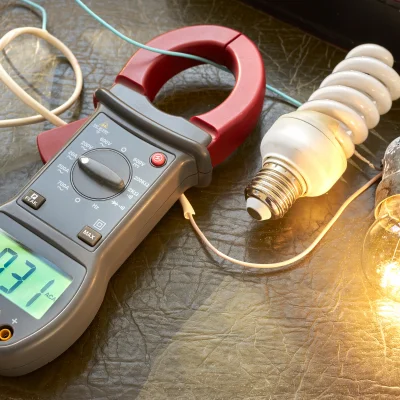
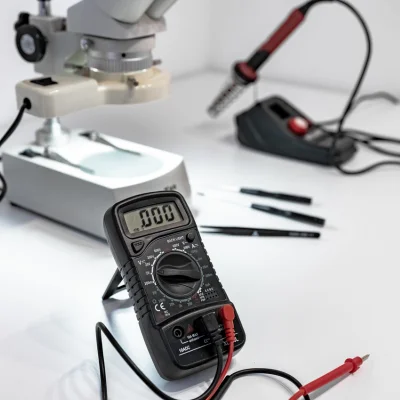
All multimeters and clamp meters are tested for:
– Input protection (fuse integrity, MOVs)
– Compliance with IEC 61010-1 safety standards
– CAT II, CAT III, and CAT IV voltage transient simulations
Engineering-Led Evaluations
Team: 3 Certified Electrical Engineers (including one IEEE senior member)
Process:
We perform standardized lab testing using:
– Fluke 5522A Multi-Product Calibrator – for verifying voltage, current, resistance accuracy
– Keysight U1733C LCR Meter – for component-level testing on internal circuits
– Hioki IR4056 Insulation Resistance Tester – to ensure product safety under load
All multimeters and clamp meters are tested for:
– Input protection (fuse integrity, MOVs)
– Compliance with IEC 61010-1 safety standards
– CAT II, CAT III, and CAT IV voltage transient simulations
Automotive Performance Lab
Team: 2 ASE-Certified Automotive Diagnostics Technicians
Process:
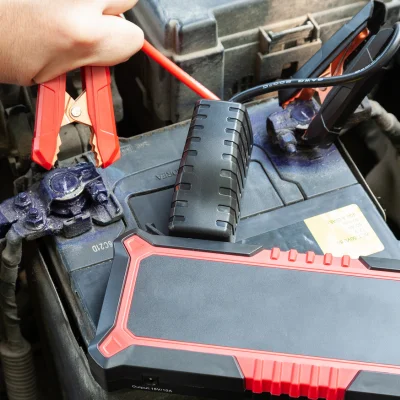
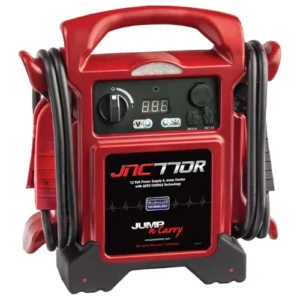
Our jump starters are tested on vehicles like the Ford F-150 (5.0L V8) and Ram 2500 Diesel (6.7L Cummins).
Tools used:
– Midtronics MDX-650P battery analyzer – to simulate dead battery conditions
– FLIR TG267 thermal imager – to monitor temperature during high-amp output
– Klein Tools ET920 USB Tester – to validate 5V/9V fast-charging claims
We validate:
– Peak amp delivery under load (cold-crank test at 0°C)
– Reverse polarity protection using error injection
– Charge retention after 30 days of standby

Automotive Performance Lab
Team: 2 ASE-Certified Automotive Diagnostics Technicians
Process:
Our jump starters are tested on vehicles like the Ford F-150 (5.0L V8) and Ram 2500 Diesel (6.7L Cummins).
Tools used:
– Midtronics MDX-650P battery analyzer – to simulate dead battery conditions
– FLIR TG267 thermal imager – to monitor temperature during high-amp output
– Klein Tools ET920 USB Tester – to validate 5V/9V fast-charging claims
We validate:
– Peak amp delivery under load (cold-crank test at 0°C)
– Reverse polarity protection using error injection
– Charge retention after 30 days of standby

Field Testing & Data Logging
Team: 12 licensed electricians and HVAC pros across 5 U.S. states
Process:
Devices are tested on real job sites including:
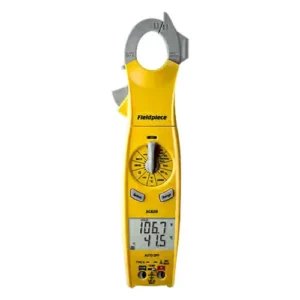
– Split-unit HVAC diagnostics using the Fieldpiece SC660 Clamp Meter
– Residential panel work with Fluke 87V Industrial Multimeter
– Automotive repairs using the Innova 3340 Automotive Multimeter
Metrics captured:
– Real-time RMS readings, AC/DC current, resistance
– Clamp accuracy at low current levels (0.1A)
– Voltage drop under load
All feedback is scored on:
– Accuracy
– Build quality
– Ease of use
– Battery efficiency
Field Testing & Data Logging
Team: 12 licensed electricians and HVAC pros across 5 U.S. states
Process:
Devices are tested on real job sites including:
– Split-unit HVAC diagnostics using the Fieldpiece SC660 Clamp Meter
– Residential panel work with Fluke 87V Industrial Multimeter
– Automotive repairs using the Innova 3340 Automotive Multimeter
Metrics captured:
– Real-time RMS readings, AC/DC current, resistance
– Clamp accuracy at low current levels (0.1A)
– Voltage drop under load
All feedback is scored on:
– Accuracy
– Build quality
– Ease of use
– Battery efficiency
Results Analysis & Review Integrity
Team: 1 Data Analyst + 1 Technical Reviewer (ex-Tektronix editor)
Process:
– Raw test data is compiled using LabVIEW and visualized in Google Data Studio
– Product reviews are written by domain experts – no AI or outsourced writers
– Results are compared against manufacturer spec sheets and certifications (UL, CE, ETL)
We disclose:
– Failure rates over 30-day active usage
– Battery degradation trends
– Warranty and customer support responsiveness
All reviews are independent, unpaid, and updated every 6 months

Results Analysis & Review Integrity
Team: 1 Data Analyst + 1 Technical Reviewer (ex-Tektronix editor)
Process:
– Raw test data is compiled using LabVIEW and visualized in Google Data Studio
– Product reviews are written by domain experts – no AI or outsourced writers
– Results are compared against manufacturer spec sheets and certifications (UL, CE, ETL)
We disclose:
– Failure rates over 30-day active usage
– Battery degradation trends
– Warranty and customer support responsiveness
All reviews are independent, unpaid, and updated every 6 months
Recent Guides
FAQs
What safety category rating (CAT II, III, IV) should I consider when selecting a multimeter for residential versus industrial applications?
When choosing a multimeter, it’s crucial to consider the safety category rating to ensure protection against voltage transients. For residential applications, a CAT II rating is typically sufficient, while industrial environments may require CAT III or CAT IV ratings. For instance, the Fluke 117 Electrician’s Multimeter is a best digital multimeter for electricians with a CAT III 600V rating, making it suitable for commercial settings.
How does True RMS functionality impact the accuracy of measurements in non-linear electrical systems?
True RMS (Root Mean Square) functionality allows multimeters to accurately measure both sinusoidal and non-sinusoidal waveforms, which is essential in non-linear electrical systems. This ensures precise readings in environments with variable frequency drives or other complex loads. The Fluke 87V Industrial Multimeter is a true RMS multimeter for accurate readings, ideal for such applications.
What are the implications of using a multimeter with a shared input jack for voltage and current measurements?
Using a multimeter with a shared input jack for voltage and current can lead to safety hazards if the meter is inadvertently set to the wrong measurement mode. It’s essential to follow the manufacturer’s guidelines and ensure correct settings to prevent damage to the device or injury. For safe and reliable measurements, consider the Fluke 88V Deluxe Automotive Multimeter, a Fluke multimeter for automotive use.
In what scenarios is a clamp meter preferred over a traditional multimeter for current measurements?
Clamp meters are ideal for measuring current without interrupting the circuit, making them suitable for high-current applications or when continuous operation is necessary. The Fluke 323 True RMS Clamp Meter is a best clamp meter for HVAC technicians, offering reliable performance in such scenarios.
What is the significance of inrush current measurement in clamp meters for motor diagnostics?
Inrush current measurement helps assess the initial surge of current when motors start, aiding in diagnosing potential issues like overcurrent conditions. The Fluke 374 FC is a clamp meter with inrush current detection, designed for such applications.
Can clamp meters accurately measure both AC and DC currents, and what technology enables this?
Clamp meters are ideal for measuring current without interrupting the circuit, making them suitable for high-current applications or when continuous operation is necessary. The Fluke 323 True RMS Clamp Meter is a best clamp meter for HVAC technicians, offering reliable performance in such scenarios.
What factors determine the appropriate amp rating for a jump starter relative to vehicle engine size?
The required amp rating depends on the engine’s displacement and type; larger engines, especially diesel, necessitate higher peak amps for effective starting. The GOOLOO 4500A Car Battery Jump Starter is a heavy duty jump starter for trucks, suitable for such applications.
How does temperature affect the performance of lithium-ion versus lead-acid jump starters?
Lithium-ion jump starters typically perform better in cold temperatures due to their higher energy density and better cold-cranking capabilities compared to lead-acid counterparts. The NEXPOW 2000A Peak Car Jump Starter is a lithium-ion jump starter with USB ports, offering reliable performance in various conditions.