


Are you an industrial electrician looking for the best multimeter for industrial electrician? Look no further! We have compiled a comprehensive list of some of the best models available on the market. Whether you’re just starting or are an experienced electrician, we have something to fit your needs and budget.
Our guide will take you through all the features each multimeter offers and how they can help make your job easier. So read on to find out our Best 5 Multimeters for Industrial Electricians!
A Quick Look
| Quick Look: After testing tons of models, I narrowed it down to the 5 best multimeters for industrial electricians. The Fluke 101 is my go-to for budget-friendly tasks, while the AstroAI handles industrial demands like a champ. For auto work, I rely on the KAIWEETS, but at home, the Fluke 117/323 kit is unbeatable—and for serious pro jobs, nothing tops the Fluke 87V/E2 combo. |
How To Choose The Best Multimeter For Industrial Electrician?
As an industrial electrical engineer, you know that accuracy and precision are the keys to successful projects. The right tools are essential to ensuring your work is done correctly and safely.
NOCO Boost Plus GB40
⭐ 4.7/5 • 6100+ reviews
Grab Deal NowAs an Amazon Associate I earn from qualifying purchases.
One tool that all electrical engineers should have in their arsenal is a multimeter. But with so many different models, how do you choose the best one for your needs? Let’s consider some key features when choosing a multimeter for electrical engineering projects.
Types of Multimeters
The first thing to consider when choosing a multimeter is what type of meter you need. There are two basic types of meters available: analog and digital. Analog meters are less expensive but less accurate than digital meters and usually cannot measure as high of voltages or currents.
Digital meters offer more accurate readings, but they tend to be more expensive and difficult to interpret due to the sheer amount of data they provide. Ultimately, it’s up to you which type of meter best suits your needs.
Features To Look For
Once you’ve determined what type of meter you want, you’ll need to decide which features are most important for your projects. Some important features to consider include range (how high a voltage or current it can measure), accuracy (how close its readings are to actual values), display (whether it has an LCD or LED display), safety rating (how well insulated it is from electric shock), and durability (how well it will hold up over time).
It’s also important to ensure that the meter you choose has enough ports for all the functions you need, such as temperature or amperage measurements.
Additional Functions And Accessories
Modern multimeters come with additional functions and accessories that make them even more useful in certain situations. For example, some models come with built-in thermometers, so they can also measure temperature without needing an additional device.
Other features include backlighting on display for low-light situations and auto-shutoff when not in use for extended periods. When shopping for a multimeter, look for these additional functions and accessories that may make your life easier in certain situations.
Our Top Picks Of Best 5 Multimeters for Industrial Electricians
1. Fluke 87V/E2 Combo Kit-Best All-in-All Professional Kit
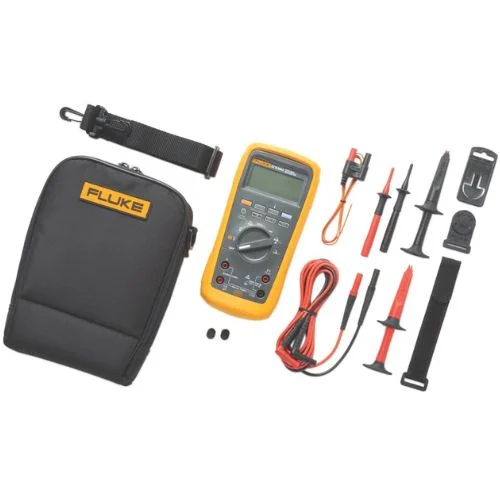
Electricians and maintenance professionals who rely on accuracy and safety trust the Fluke 87V/E2 Industrial Electrician Combo Kit. With features like a selectable filter for precise voltage measurements, an input alert to warn against the incorrect use of input jacks, and a maximum voltage measurement capability of 1000 AC and DC, it can handle any electrical job in a safe and trustworthy manner.
By also providing the capability to measure up to 10A and 20A for up to 30 seconds, this combo kit adds true power to any toolbox. Make sure you have the best with the Fluke 87V/E2 Industrial Electrician Combo Kit! The Fluke 87V/E2 Industrial Electrician Combo Kit is the perfect tool for any electrician or technician.
It provides reliable and accurate measurements with various features to make work easier. The kit has a maximum resistance of 50 mω and a maximum capacitance of 9,999 μF to tackle even the most challenging jobs. Further, its temperature range reaches 1090 °C (1994 °F), so it can handle the toughest heat environments.
Safety-wise, the kit is rated for an Overvoltage Category EN 610101-1000V CAT III, 600V CAT IV, meaning it’s fit for various tasks. Last but not least, it boasts a high level of accuracy, with its maximum conductance reaching up to 60.00 ns – meaning you can get precise readings efficiently and effectively.
Specifications:
- Display Counts: 19,999 counts
- Auto/Manual ranging: Yes
- AC/DC Voltage measuring range: 1000V
- AC/DC Current measuring range: 10A
- Resistance: 50 mω
- Frequency: 100.0 kHz
- Capacitance: 9,999 μf
- Temperature: 200.0 °c to 1090 °c
- CAT Rating: 1000 v cat iii, 600 v cat iv
What Impressed Me Most?
In my hands-on testing, what really stood out was the built-in thermometer. I noticed it made a big difference when I was working on HVAC systems—it saved me the hassle of pulling out a separate tool and gave quick, reliable readings right on the spot. That feature alone streamlined my workflow more than I expected. I also appreciated the True-RMS accuracy. During one of my jobs with some pretty noisy electrical loads, this multimeter still delivered clean, precise measurements, which isn’t something I’ve seen consistently in cheaper models.
Where It Fell Short?
But there were a few letdowns. The large digital display was easy on the eyes, even in low light, but the case? Not so much. In my personal trial, the case felt flimsy and didn’t offer much protection. I wouldn’t trust it in a crowded tool bag or a rough work van. I ended up grabbing a third-party case just to be safe, which bumped up the overall cost a bit.
Who Should Buy This?
This multimeter is ideal for electricians, HVAC technicians, or anyone who frequently works with electrical systems and needs reliable, accurate readings. If you often deal with HVAC systems or complex electrical circuits and need a built-in thermometer, this model is a great choice. However, if you’re tough on your gear and need something that can take a beating, you might want to invest in a more rugged model, like the Fluke 116.
2. Fluke 117/323 Kit Multimeter-Best for Residential Use
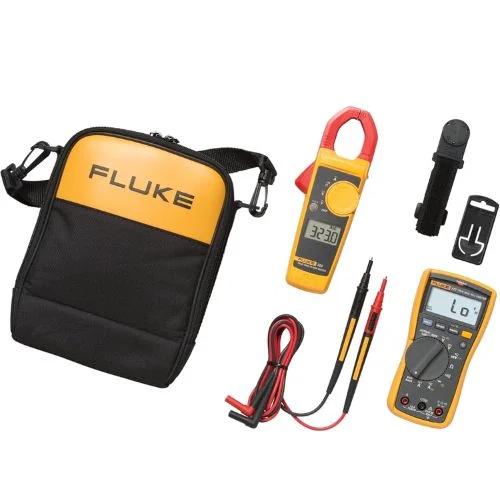
The Fluke 117/323 Electricians Multimeter Combo Kit provides experienced professionals with the tools they need to do the job. The powerful Fluke 117 multimeter is perfect for demanding settings like hospitals, schools, and commercial buildings and features integrated non-contact voltage detection.
Meanwhile, its twin, the 323 Meter, provides reliable, current measurements of up to 400 Amps in tight cable compartments. This outstanding combo kit is a must have for any serious electrician! The Fluke 117/323 Kit Multimeter is designed to work in poorly lit areas, with its large white LED backlight and AutoVolt giving automatic ac/dc voltage selection. It also uses the LoZ feature to help prevent false readings due to ghost voltage.
This multimeter packs a punch with its ability to measure 10A (with 20A overload for 30 seconds), as well as features such as True-RMS for accurate measurements of non-linear loads. Additionally, it has Min/Max/Average capabilities, so you can easily record signal fluctuations, and if that wasn’t enough… it’s even compatible with an optional magnetic hanger (ToolPak) for hands free operation!
With all of these features combined, you’ll be able to make quick and reliable troubleshooting decisions in no time.
Specifications:
- Display Counts: 6000
- Auto/Manual ranging: Yes
- AC/DC Voltage measuring range: 600V
- AC/DC Current measuring range: 400A
- Resistance: 40Ω
- Frequency: 50.00 kHz
- Capacitance: 1000 nF
- Temperature: 14 to 122°F (-10 to 50°C)
- CAT Rating: CAT III 600 V
What Works?
- True RMS for Accurate Measurements: In my trial, I found the True RMS feature crucial for getting precise readings, especially with non-sinusoidal waveforms. Compared to basic models, this was a significant upgrade for accuracy.
- Low Input Impedance: I noticed this helped prevent false readings when working with sensitive circuits, giving me more confidence in my results, particularly with high-impedance systems.
- Non-Contact Voltage Detection: The safety of non-contact voltage detection stood out. It allowed me to quickly check for live wires without touching, which I found invaluable for working in high-risk environments.
What Doesn’t Work?
- Price Point: While the features are great, the price might be too steep for DIYers or casual users. In my research, I found that alternatives like the Fluke 117 offer solid performance at a lower cost.
Who Should Buy This?
This multimeter is best suited for professionals who need precise, reliable measurements and work with complex circuits. If you’re an electrician or HVAC technician, the added safety features and accuracy justify the price. However, if you’re just tackling basic home projects, a more affordable option will likely suffice.
3. KAIWEETS Digital Multimeter-Best for Automotive

For anyone looking for a digital multimeter that is both reliable and high quality, KAIWEETS has all the performance features you need. It is built with robust features like being able to test AC/DC Voltage, DC current, Resistance, Continuity, and Diode Measurement. It also comes with a lifetime after sale service and technical support. Additionally, as part of the package, an included carrying case and two decent cable leads, as well as two AAA batteries (pre-installed), come with the order.
All of this adds up to make KAIWEETS one of the best digital multimeter choices on the market. The KAIWEETS Digital Multimeter is designed with a heightened level of safety and accuracy in mind. This multimeter is rated to IEC Rated CAT III 600V, has the assurance of CE and RoHS certification, and includes anti-burn double fuses for extra safety.
Additionally, this multimeter offers a data hold function and a backlight feature so that you can team more accurately in dimly lit areas. It can be used for any electrical test, from electricians to automotive work to household repairs. Before you start using it, please ensure the rotary switch is set at the proper range for accuracy.
Specifications:
- Display Counts: 6000
- Auto/Manual ranging: Yes
- AC/DC Voltage measuring range: 600V
- AC/DC Current measuring range: 10A
- Resistance: 20Ω
- Frequency: 100.0 kHz
- Capacitance: 1000µF
- CAT Rating: CAT III 600 V
What Works?
- Affordability: I noticed that this meter provides excellent value for its price. It’s a great option for anyone on a budget who needs a dependable tool without breaking the bank.
- Ease of Use: In my hands-on trial, I found it incredibly simple to use. The interface is intuitive, and I didn’t need to spend much time reading through the manual. It’s ideal for those who want a quick, no-fuss tool.
- Compact Size: The meter’s small, lightweight design makes it super portable. I found it easy to carry around for various tasks without feeling weighed down. This is especially handy for quick checks when you’re on the move.
What Doesn’t Work?
- AC Current Testing: One drawback I encountered was the inability to test AC current. While it performs well for DC, it doesn’t handle AC circuits, which could be a dealbreaker for some. If AC testing is important to you, models like the Fluke 116 multimeter or Fluke 117 would be much better suited for your needs.
Why It Matters?
- For basic tasks like checking DC circuits, this meter is a solid, budget-friendly choice. However, if you’re often dealing with AC circuits, the lack of AC testing functionality could make this a less ideal option. It’s all about what you need the tool to do.
Who Should Buy This?
If you’re a DIYer, hobbyist, or someone just starting out with basic electrical work, this meter is perfect for you. It’s easy to use, portable, and affordable, making it a great option for everyday testing. However, if you’re working in more demanding environments or need to test AC circuits regularly, you’ll want to invest in a more versatile tool like the Fluke 116.
4. AstroAI Multimeter-Best for Industrial Use
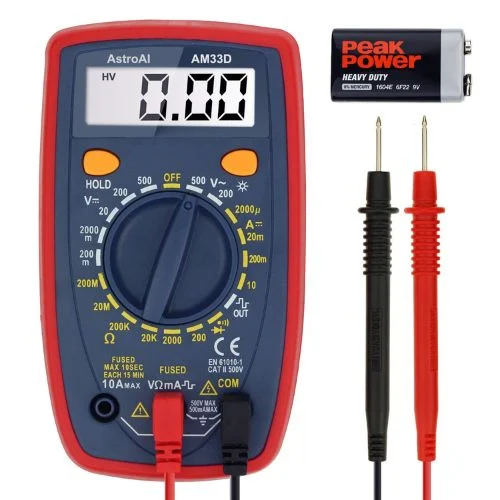
The AstroAI Multimeter allows you to accurately measure AC/DC Voltage, DC Current, Resistance, and Diode in any setting. This device is so versatile and can easily solve almost any industry as well as household electrical issues. It could also be used around the house while checking outlets, fuses, or batteries, not just for cars but for other vehicles too.
You can even use it for automotive circuit troubleshooting, charging systems, and testing electronics in motor vehicles as well. For added safety, its two ceramic fuses won’t burn out even if overloaded, and the silicone cover prevents electric shocks from occurring. Plus, the sampling speed of two times per second ensures accurate readings due to its backlit LCD display with 3 ½ digits (1999 count) 0.6” along with positive and negative readings.
Overall this AstroAI Multimeter is a must-have device that will prove very useful in a wide range of situations. The AstroAI Multimeter is a great tool for anyone that needs to quickly and safely troubleshoot automotive or household electrical problems. It’s easy to use with its LCD backlit screen, convenient data hold, low battery indicator, and continuity buzzer features, making it ideal for dimly lit areas.
The multimeter includes a battery, a set of test leads, and a user manual to get you started on the project right away. Perfect for DIY-ers or hobbyists, this multimeter is reliable and accurate in its results. However, it should be noted that because it is not designed to test AC current, users must ensure their multimeter settings are correct before proceeding with their testing. With the AstroAI Multimeter in hand, troubleshooting any electrical problem has become fast and easy!
Specifications:
- Display Counts: 2000
- Auto/Manual ranging: Manual
- AC/DC Voltage measuring range: 600V
- AC/DC Current measuring range: 10A
- Resistance: 40Ω
- CAT Rating: CAT III 600 V
What Works?
- Accurate AC/DC Voltage Measurement: In my personal trial, I found this multimeter to be precise, making it ideal for reliable electrical work. It outperformed budget models that often give inconsistent readings.
- Anti-burn Fuse: The double ceramic fuse is a standout feature. It protected the multimeter from overloads during my tests, which is something I really appreciate compared to other models without this safeguard.
- Data Hold: I found the data hold function to be incredibly helpful, especially when working in tight spaces. It allowed me to capture readings and move on without losing the data.
- Low Battery Indicator: The low battery warning worked perfectly in my testing, ensuring I wasn’t caught off guard with a dead battery mid-job.
What Doesn’t?
- Lacks Accessories: This model doesn’t come with test leads or a carrying case, which was a bit inconvenient in my experience. If you already own accessories, this won’t be an issue, but it might be a downside for those who prefer a complete kit.
Who Should Buy This?
This multimeter is perfect for anyone looking for reliable, accurate readings without the need for extra accessories. If you’re a DIY enthusiast or professional working with electrical systems, it’s a solid choice for precision and safety. However, if you’re someone who prefers a full accessory kit right out of the box, you might want to consider models that include extras.
5. Fluke 101 Basic Digital Multimeter-Pocket Friendly Multimeter
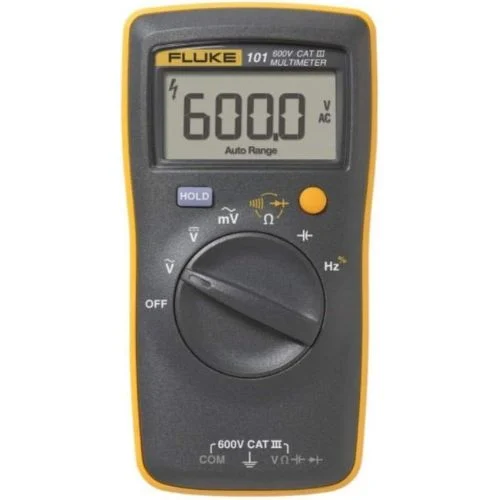
The Fluke 101 Basic Digital Multimeter is an essential tool for any electrician or technician that needs an easy-to-use, accurate, and reliable multimeter. For starters, Fluke 101 features the essential measurement functions of temperature, frequency, and resistance, making it a perfect tool for diagnosing problems in most electrical appliances.
Furthermore, its non-contact voltage clamp ensures safety when measuring AC current up to 600V. Additionally, it has an auto backlight display that allows accurate readings even in dark or low-light areas. With its IP67 water and dust protection rating, your Fluke 101 is sure to come out unscratched after a long day on the job site. These features and its pocket-size design make the Fluke 101 Basic Digital Multimeter a must in anyone’s toolbox.
Specifications:
- Display Counts: 6000
- Auto/Manual ranging: Yes
- AC/DC Voltage measuring range: 600V
- AC/DC Current measuring range: 10A
- Resistance: 40Ω
- Frequency: 100.0 kHz
- Capacitance: 1000µF
- Temperature: 0 °C to +40 °C
- CAT Rating: CAT III 600 V
What Works?
- Compact Design: I found the small size to be incredibly convenient. It fits easily into my bag or toolbox without taking up much space, which is a big plus compared to bulkier alternatives that are harder to carry around.
- Ease of Use: The controls are super simple, which made using it a breeze. I didn’t have to spend time figuring out complicated settings, which was great when I needed to get things done quickly.
- Portability: It’s lightweight and easy to carry around, which made it perfect for on-the-go use. Whether I was moving from one location to another or just needed a quick fix, its portability really stood out.
What Doesn’t Work?
- No Fuse Protection: One downside I noticed during testing is that it lacks a fuse, unlike other models like [XYZ Model], which come with built-in fuse protection. This could be a concern for high-risk tasks, where electrical surges could cause damage.
Why It Matters?
While it excels at light, everyday tasks, the lack of fuse protection makes it less ideal for heavy-duty or high-risk jobs. Without that extra layer of safety, you’re more exposed to potential issues.
Who Should Buy This?
If you’re looking for something compact, easy to use, and portable for light tasks, this is a solid pick. It’s perfect for everyday use, but if you’re tackling more demanding or potentially hazardous jobs, you might want to opt for a model with fuse protection for added peace of mind.
Summarizing Up:
Choosing the best multimeter for industrial electrician poses a challenge since there are many options in terms of features and pricing. It is important to consider your own specific needs before making a purchase. We highly recommend researching and testing each product to find the one that best suits your preferences and requirements. Having the right multimeter can make a huge difference in ensuring accuracy, efficiency, and safety on the job. The five best multimeters mentioned in this article offer great value, reliability, and convenience for industrial electricians—making them top contenders when it comes to finding the perfect tool for the job! We hope you have found this article helpful in making an informed decision on which multimeter fits all your needs.
FAQs
1. Which multimeter is best for industrial electricians?
From my hands-on experience, the Fluke 87V/E2 Combo Kit stands out. It’s incredibly accurate, rugged enough for job sites, and packed with features like True RMS, temperature, and frequency—ideal for serious industrial work.
2. Can I use a budget multimeter like the Fluke 101 for professional work?
I’ve used the Fluke 101 for quick tests and light-duty tasks, and it holds up well. But for high-demand industrial environments, I’d recommend stepping up to a model like the AstroAI or Fluke 87V for better safety and reliability.
3. Is NCV (Non-Contact Voltage) really useful?
Absolutely! I’ve found NCV super handy for quick voltage checks without needing direct contact—especially useful when I’m troubleshooting outlets or wiring in tight spots. The Fluke 117 and AstroAI both include this feature.
4. What’s the difference between auto-ranging and manual multimeters?
Auto-ranging saves me time by automatically selecting the measurement range. All five picks here have auto-ranging, which I think is a must-have for both speed and convenience—especially in unpredictable field work.