


Electrical wiring plays a key role during the holiday season especially when decorating with LED lights. As we all know, Christmas is at the door and the most common thing we do is decorate the house. LED lights are a great way to do this as they come in a variety of shapes and colors and last much longer than traditional incandescent bulbs. In this blog post, I will tell you how to wire LED lights to a switch. As we all know, LED lights are a semiconductor light source and hence wiring them to a switch is different than wiring traditional incandescent bulbs.
| Quick Look: I wire single-color LEDs by connecting VCC to a 12V power supply, GND through a switch, and OUTPUT to complete the loop. For RGB LEDs, I connect R, G, B, VCC, and GND, usually using a controller. Then I run the OUTPUT through the switch. It’s simple once you get the hang of itbjust be sure to cut the power and use insulated wires for safety. |
Wiring LED Lights to a Switch: Quick Reference Table
Types of LED Lights and their terminals:
Before directly jumping on to wiring, you must understand how many types of LED lights are in the market and how they operate. Because some of them light up directly on 110V and some have programmable and dimmable switches.Understanding how to hang LED strip lights properly is just as important as wiring them.
A Quick Look


Single Color LEDs

These are the most common type in which there is only one color and they require a single power supply to light up. If you’re wondering about whether LED lights use a lot of electricity, it’s important to know that the terminals on these LEDs usually have three pins, namely VCC, GND, and OUTPUT.
NOCO Boost Plus GB40
⭐ 4.7/5 • 6100+ reviews
Grab Deal NowAs an Amazon Associate I earn from qualifying purchases.
How does it work?
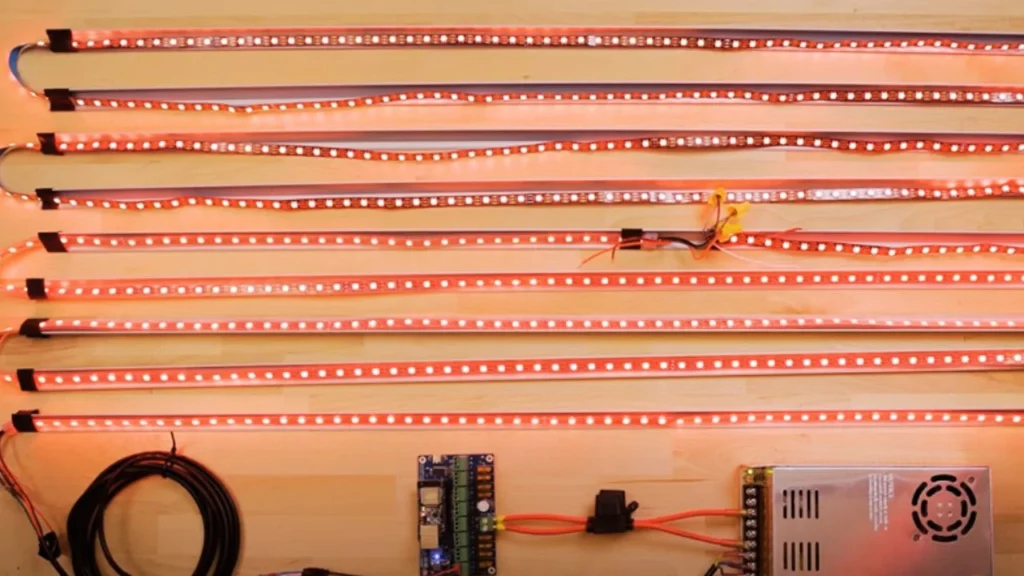
To wire a single-color LED light to a switch you will need the following items:
– One 12V DC power supply
– An appropriately sized switch for the circuit
– Two pieces of insulated copper wire
- Connect one end of the wire to the VCC pin on the LED and another end to the power supply.
- Connect the other end of the wire to one of the terminals on the switch and then connect it to the GND pin on the LED.
- Finally, connect the OUTPUT pin on the LED to another terminal on the switch.
- When you turn on the switch, it will complete the circuit and the LED light will turn on. This is how you can wire a single-color LED light to a switch.
Multi-Color LEDs

These are the type of LED lights that can produce multiple colors at once. The terminals on these LEDs will have six pins namely R (red), G (green), B (blue), VCC, GND, and OUTPUT.
How does it work?

Unlike single-color led lights, RGB lights come with a controller or you can say a remote which can be used to control the various mode and colors of these lights. To wire a multi-color LED light to a switch you will need the following items:
– One 12V DC power supply
– An appropriately sized switch for the circuit
– Three pieces of insulated copper wire
- connect one end of each wire to the VCC pin on the LED and another end to the power supply.
- Connect the other end of each wire to one of the terminals on the switch and then connect it to the GND pin, R pin, G pin, and B Pin respectively.
- Finally, connect the OUTPUT pin on the LED light to another terminal on the switch and you will be able to control the LED light with the switch.
- This is how you can wire a multi-color LED light to a switch.
- I hope this blog post helps you understand how to wire led lights to a switch. Now, it’s time for you to get creative and come up with some amazing DIY projects.
A Revised Short look
In both types of LEDs, the termination points will be different. For single-color LEDs, you need to connect the VCC pin to a power supply, the GND pin to the switch, and finally OUTPUT pin to another terminal on the switch. For multi-color LEDs, you will need to connect all four (VCC, GND, R pins, G pins, and B pins) pins to the power supply and then the OUTPUT pin to another terminal on the switch.
With this, you will be able to control your LED lights with a switch. Now it’s time for you to get creative and come up with some amazing décor ideas for your home this Christmas season! Good luck!
Things you should consider if you don’t know how to wire led lights to a switch:
- It is always advisable to use insulated wires while wiring up your LED lights and make sure the circuit is safe and secure. Also, if you are dealing with high voltages like 110V DC, then it is important that you take all safety precautions before initiating the setup.
- Never directly plug them into your home power socket, as this may damage them or cause a short circuit. Try to use a circuit breaker at the input side so that you are safe from short circuits.
- Also, check your power supply and switch ratings to make sure they are compatible with the LED lights before making any connections.
- Last but not least, make sure you disconnect the power supply when installing or troubleshooting your LED lights.
- If you see any spark or dimness in lights then consult the user manual guide or a professional electrician to avoid any mishappening.
These tips will help you wire up your LED lights in a safe and efficient manner.
Final Verdict:
Hopefully, after reading this guide, you know very well how to wire LED lights to a switch. I have discussed both the single and multi-color LED lights wiring to the switch. Before initiating the setup, it is always important to take safety precautions and follow all guidelines mentioned in the article. If you’re working with electrical systems, you may want to consider using electrician multimeters. Disconnect the power supply when installing or troubleshooting your LED lights and always consult a professional electrician if any issue arises.
FAQs
Q1. Can I wire LED lights directly to a 110V power source?
No, most LED lights especially single and multi-color types require a 12V DC power supply. Wiring them directly to 110V can damage the LEDs or create a fire hazard unless they are specifically rated for that voltage.
Q2. What type of switch should I use for LED lights?
Use a switch rated for the same voltage and current as your LED circuit. For a 12V DC system, a simple toggle or rocker switch rated for at least 12V and the current your LEDs draw will work well.
Q3. Why are my LED lights flickering after wiring them to the switch?
Flickering could be caused by a loose connection, incompatible switch or power supply, or low-quality LED strips. Double-check your wiring and ensure all components are rated for the same voltage and current.
Q4. Do I need resistors when wiring LED lights to a switch?
Some LEDs come with built-in resistors, especially LED strips. However, if you’re wiring individual LEDs without a controller, you may need resistors to avoid burning them out. Always check the manufacturer’s specifications.
Q5. Is it safe to install LED lights myself?
Yes, as long as you follow proper safety guidelines: use insulated wires, disconnect power before working, and ensure voltage compatibility. For complex setups or high-voltage systems, it’s best to consult a professional electrician.