


Understanding multimeter symbols and what do they mean is very important when working with electrical equipment at home. Whether you’re testing an outlet, a fuse, or a battery, knowing the correct symbols ensures that you’re using your multimeter properly.
Most multimeters let you measure things like voltage, current, resistance, and continuity. For homeowners, the most common tasks are checking AC voltage in outlets (which in the US is usually 120 volts) or testing batteries for DC voltage. You don’t need to be an expert electrician, but knowing these basic symbols will make your work faster and safer.
A Quick Look


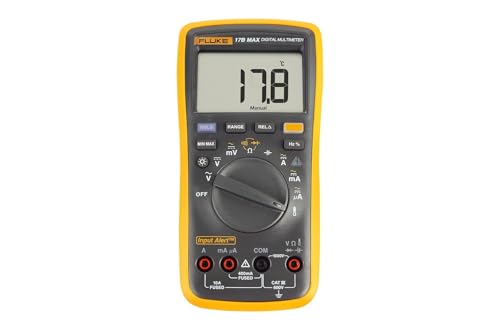
In this guide, we’ll walk you through each of the key multimeter symbols you’ll need for your DIY electrical projects.
NOCO Boost Plus GB40
⭐ 4.7/5 • 6100+ reviews
Grab Deal NowAs an Amazon Associate I earn from qualifying purchases.
Understanding Multimeter Symbols: A Visual Breakdown
Multimeter symbols and what do they mean are essential for using your device properly.
Multimeter dials are full of symbols that represent different functions like voltage, current, and resistance.
- AC Voltage:
- Symbol: “V” with a wavy line (~).
- Use this when testing home outlets, which typically have 120 volts in the U.S. or 220-240 volts in other countries.
- DC Voltage:
- Symbol: “V” with a straight line over a dotted line.
- Perfect for testing batteries, like a 12.6-volt car battery.
- Continuity Test:
- Symbol: Curved lines like a Wi-Fi signal.
- If the meter beeps, the circuit is continuous and functioning correctly.
Quick Fix

Multimeter Symbols and What Do They Mean?
By understanding these multimeter symbols, you’ll be able to make accurate readings and prevent any mistakes.
- Voltage Measurement Symbols
When using a multimeter, it’s important to understand multimeter symbols, especially for voltage. Your multimeter measures both AC voltage and DC voltage, and each has its own symbol.
- AC voltage is represented by a “V” with a wavy line (~). You’ll use this setting when checking home outlets. In the U.S., standard AC voltage is around 120 volts, while in other countries, it’s usually between 220-240 volts.
- DC voltage is used for devices like batteries. The symbol is a “V” with a solid line over a dotted line. If you’re testing a car battery, for example, a healthy one should show about 12.6 volts of DC voltage.
- Current Measurement Symbols (AC/DC)
Measuring current with your multimeter requires knowing the correct multimeter symbols. Just like with voltage, there are two types of current: AC current and DC current.
- AC current is represented by an “A” with a wavy line (~). You’ll use this setting to measure the current running through appliances or larger circuits in your home.
- DC current is shown by an “A” with a solid line over a dotted line. You’ll use this for smaller electronics or car batteries. When testing DC current, many small devices will use milliamps (mA). For example, a digital device might draw around 100 mA of DC current.
- Resistance Symbol (Ω – Ohms)
When your multimeter measures resistance, it’s testing how much a material or circuit resists the flow of electricity. The symbol for resistance is the Greek letter Omega (Ω), which stands for ohms.
- The resistance setting is useful for testing components like wires or fuses. If a fuse has blown, the multimeter will show a very high number or infinite resistance.
- For example, a working light bulb might have a resistance of 10-20 ohms. If you test a bad bulb, the reading will show OL or “overload,” meaning there’s no current flow.
- Continuity Test Symbol
A continuity test checks if a circuit is complete, meaning electricity can flow without interruption. The symbol for continuity looks like a series of curved lines, similar to a Wi-Fi signal.
- If the circuit is complete, the multimeter will make a beeping sound. This is useful for checking if wires, switches, or fuses are working.
- For example, if you’re testing a wire in your home and the multimeter beeps, you know the connection is good. If it stays silent, the wire may be damaged or disconnected.
- Capacitance Measurement Symbol
Capacitance measures how much electrical charge a component, like a capacitor, can store. The capacitance symbol on a multimeter looks like two vertical lines, with one curved and one straight.
- This function is mostly used for testing capacitors in electronic devices. A healthy capacitor might show 10 microfarads (µF), but a damaged one will give a reading of 0 µF.
- For example, if your air conditioner’s capacitor isn’t working, using this function can tell you if it’s time for a replacement.
By following these explanations, you’ll better understand how to use the key multimeter symbols to measure voltage, current, and resistance etc.

Advanced Multimeter Features for Home Use
Knowing multimeter symbols can help you take advantage of advanced features.
Hold button
This feature locks the current reading on the screen, so if you’re testing multiple outlets, you don’t need to rush. For example, if you measure 115 volts on an outlet and need to record it later, the hold button stores it until you’re ready.
Temperature measurement
Some models, like the Fluke 87V, allow you to measure the temperature of wires or circuit components. For instance, you can check if the wires in your air conditioner are overheating by reading temperatures up to 400°F.
Min/Max function
This tracks fluctuations in measurements, which is useful for checking inconsistent voltages in appliances. If your fridge’s voltage drops below 110 volts or spikes above 125 volts, the Min/Max function will capture those values.
These advanced multimeter features help improve efficiency and accuracy when doing home repairs or electrical tests.
Safety Guidelines for Multimeter Use
When using a multimeter, it’s crucial to understand multimeter symbols and what they mean for your safety. Electricity can be dangerous, so follow these simple guidelines.
- Check voltage ratings: Make sure your multimeter can handle the voltage you’re testing. For example, most home outlets run at 120 volts, and multimeters like the Fluke 117 are rated for up to 600 volts.
- Use proper tools: Always use insulated probes to protect yourself from shocks, especially when testing AC voltage in outlets or circuits.
- Test your multimeter first: Before starting, test the multimeter on a known source, like a 9-volt battery. If the reading is around 9.0-9.6 volts, your device is working properly.
Conclusion
Understanding multimeter symbols and what do they mean makes electrical work easier and safer. Whether you’re testing voltage, resistance, or current, knowing the right settings and symbols is essential for getting accurate results. Always use the correct symbol when measuring AC voltage, DC voltage, or resistance.