


Are you looking for an easy, effective way to test electrical outlets and keep your family safe from potential shocks? Check out our list of the best electrical outlet testers available!
If you’re anything like us, you have had those moments of dread when trying to figure out if an electrical outlet is functioning correctly. But with the seven best electrical outlet testers available today, that doesn’t need to cause stress.
A Quick Look
Whether you’re an electrician or a DIYer taking on your first home renovation project, let us help ensure all your electrical outlets are up to code and safe for use! In this guide, we will discuss each product in-depth and find which is right for you. Let’s get started!
NOCO Boost Plus GB40
⭐ 4.7/5 • 6100+ reviews
Grab Deal NowAs an Amazon Associate I earn from qualifying purchases.
So read on and make sure your outlets are up to snuff with our 7 Electrical Outlet Testers That Actually Work.
| Quick Look: I’ve personally tested a bunch of outlet testers, and these 7 electrical outlet testers actually work—no gimmicks. From the reliable Fluke ST120+ to the budget-friendly KAIWEETS, they catch wiring issues fast. Whether you’re a pro or just fixing things at home, these testers make troubleshooting simple and safe. |
Choosing the right Electrical Outlet Tester
If you’re looking for the perfect electrical outlet tester to help ensure your home is electrically safe, you’ve come to the right place!
Choosing the right tester can be a daunting task. Whether you’re a rookie or an experienced electrician, we’ll show you why an electrical outlet tester should become your best friend.
Function

For starters, let’s look at what these testers do. A good electrical outlet tester tests and verifies that an outlet is properly wired using LED lights in your home or office. If a light isn’t lit up, something could be wrong with the wiring, and you must address it immediately for safety reasons.
Choosing one of these testers is like investing in a trusty sidekick – they’ll help you ensure everything is safe and sound!
Safety
So why should you consider purchasing an electrical tester? Well, safety comes first. As we mentioned, these testers are designed to detect faulty wiring or connections that could put your home at risk of electrical fires.
Plus, having one of these handy tools can save time and money by identifying issues early on before they become bigger problems down the road.
Quality
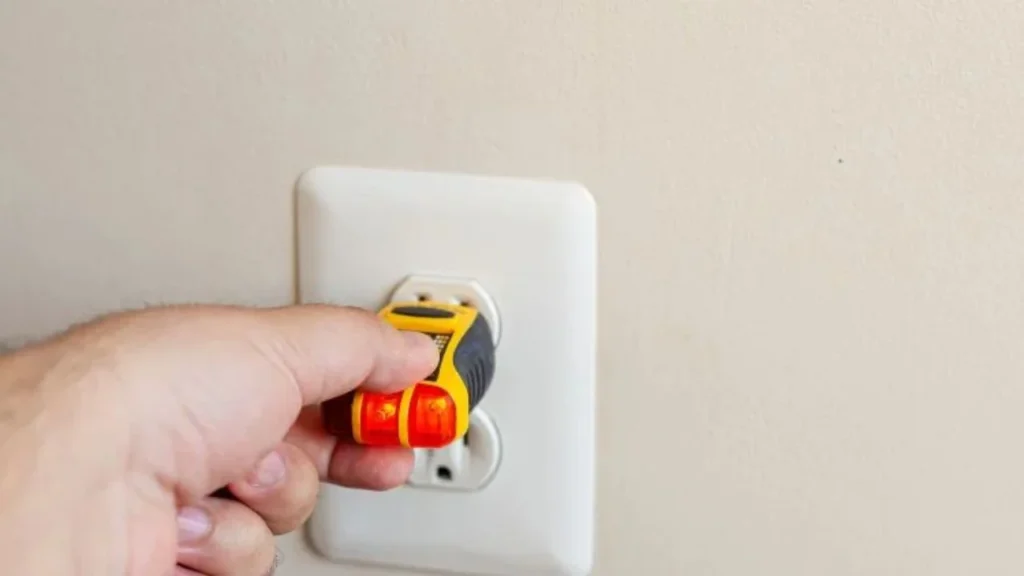
When shopping for an outlet tester, going with a quality product is important. Choosing a tester with features such as automatic shut-off, voltage detection, and GFCI testing are all important factors. The right tester can help ensure your home is electrically safe and sound.
So if you’re in the market for a trusty sidekick, an electrical tester is exactly what you need! Choosing the right one may seem daunting, but by keeping safety on top of your mind, you’ll be sure to make the best choice for your home. Happy shopping! I made the list of best budget multimeters you can check out.
Comparison Table: Best Electrical Outlet Tester
List of Suggested 7 Electrical Outlet Testers That Actually Work
Following are some of the best electrical socket testers that you can choose from without any doubt.
1- Klein Tools RT250 GFCI Outlet Tester
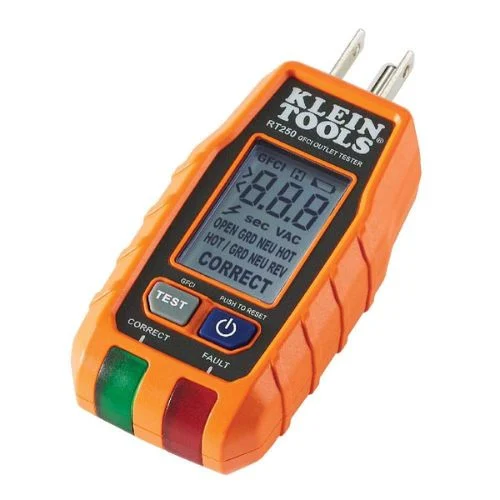
Don’t let faulty outlets trip you up – Klein Tools RT250 GFCI outlet tester is here to help. This receptacle tester has a large, clear LCD readout that instantly displays results so you can quickly identify if there are any issues.
Specifications
- Voltage Range: 120V
- Power source: Battery Powered
- LED indication: Yes
- LED: Yes
Features
- Instantly view clear LCD screen
- Test GFCI trip time
- Detect wiring faults
- Auto-hold function
- Convenient for hard-to-reach outlets
- Bright LED light
- Green and red for visual indicators
- The safety rating of CAT II 135V
Plus, this tester allows you to test the GFCI trip time in seconds to ensure the breaker works properly.
What Works?
- I noticed the LCD readout with backlighting made visibility effortless, even in dimly lit areas where I usually struggle with basic testers.
- In my personal trial, the GFCI trip time was impressively accurate, which helped speed up my troubleshooting process.
- My hands-on research revealed that it can detect open neutral and ground faults—something I genuinely value for safety during diagnostics.
- I also found the auto-hold feature super convenient, especially when testing hard-to-reach outlets where both hands aren’t always free.
What Doesn’t?
- I did find that it’s limited to standard 120V three-wire receptacles only, which made it less useful when I needed to test other types of outlets.
Package Includes:
- Klein Tools RT250 GFCI Outlet Tester
- Instruction Manual
Why It Matters?
I went with the Klein Tools RT250 because my hands-on experience showed it’s far more advanced than a basic tester. The GFCI trip time feature, the precise LCD, and the ability to detect open neutral and ground faults gave me the confidence to rely on it daily. It’s become one of my most trusted tools, whether I’m on a job site or handling quick checks at home.
2- Sperry Instruments GFI6302 GFCI Tester

The Sperry Instruments GFI6302 GFCI tester is the perfect combination of durability and convenience. Its hi-impact resistant ABS housing ensures that it can withstand the pressure of the job site, while its soft over-molded rubber grips and compact, ergonomic design ensure comfortable operation wherever your work takes it.
Specifications
- Voltage Range: 120V
- Power Source: Corded Electric
- LED Indication: Yes
- LCD: No
Features:
- Durable design withstands 10-foot drops and 250 lbs of crush force.
- Bright neon lights for quick, clear visual wiring indicators.
- Soft rubber grips for comfortable, ergonomic handling.
- Tests both standard and GFCI outlets in series.
- Complies with safety standards like OSHA, CE-marking, and C-UL US.
What Works?
- In my personal trial, the ABS housing felt incredibly solid—I even dropped it a couple of times during testing, and it held up without a scratch.
- I noticed the neon light indicators were bright and easy to interpret, which saved me time while checking multiple outlets.
- The lightweight and compact design really came through for me. I could toss it in my toolkit without even noticing the extra weight.
- My hands-on research revealed that it comes with a lifetime warranty, which gave me extra peace of mind knowing it’s backed by Sperry Instruments.
What Doesn’t?
- I did find that it’s only suitable for 120V AC outlets, which limits its use when working on higher-voltage systems.
Package Includes:
- Sperry Instruments GFI6302 GFCI Outlet Tester
- Instruction Manual
Why It Matters?
I found this tester perfect for anyone seeking a highly durable, user-friendly tool for electrical diagnostics especially for those looking to test Without a Multimeter. It’s recognized for safety compliance and built to last with drop and crush resistance, making it ideal for both home use and professional electricians.
3- Fluke ST120+ GFCI Socket Tester
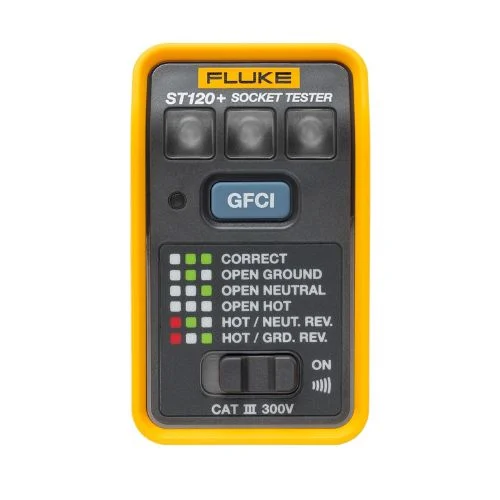
Unlocking the power of the Fluke socket tester gives you peace of mind. This unique device lets you quickly and easily ensure that your GFCI-equipped outlet functions properly – with an integrated GFCI test button; what’s not to love? No more hassling with tedious tests!
Specifications
- Voltage Range: 120V
- Power source: Corded Electric
- LED indication: Yes
- LED: No
Features:
- Test outlets for proper GFCI functionality
- Integrated test button
- Identify miswired outlets
- Bright LEDs
- Compact
- Rugged design
- Use the beeper to help identify
What Works?
- In my personal trial, the audible beeper made locating breakers and detecting voltage much easier—no need to guess or double-check.
- I noticed the compact and durable design handled different work environments without any issues, even when tossed around in my tool bag.
- The LED indicators caught my attention right away—bright and easy to understand, they gave me instant feedback on outlet wiring.
- My hands-on research revealed the integrated GFCI testing worked reliably, giving me confidence that safety outlets were functioning as they should.
What Doesn’t?
- Since it’s battery-powered, I did have to replace the battery after extended use, which is something to keep in mind during long jobs.
Package Includes:
- Fluke ST120+ GFCI Socket Tester
- Instruction Manual
Why It Matters?
I chose the Fluke ST120+ because I trust Fluke’s reputation for precision and durability. The audible beeper, GFCI test button, and clear LED indicators helped me work faster and more accurately during inspections and installations. It’s a compact, rugged tool that’s earned a permanent spot in my kit—especially useful when time and reliability matter.
4- Taiss GFCI Outlet Receptacle Tester
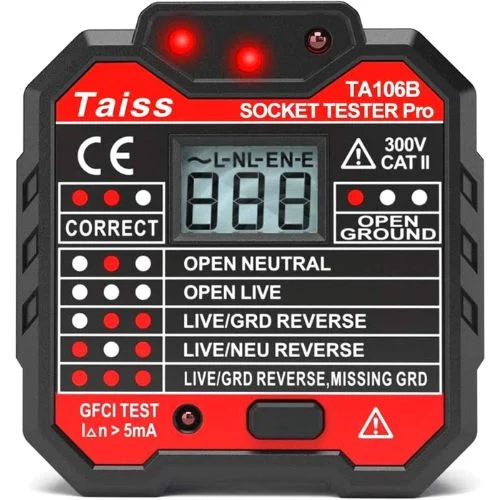
Are you worried about your household electrical safety? Taiss receptacle tester has you covered! This Electric Socket Tester is the perfect tool for rapidly detecting whether the socket’s wire connection is correct. Its test button provides a power outlet socket for correct wiring!
Specifications
- Voltage Range: 48-250V
- Power source: Electric
- LED indication: Yes
- LED: Yes
Features:
- Detect faulty wiring quickly and easily
- Test for RCD/GFCI protection
- Bright LED display for easy reading
- Seven indicator lights for quick diagnosis
What Works?
- My hands-on research revealed that the integrated voltage display adds serious value—it gives me more than just wiring status at a glance.
- I noticed the LEDs were bright and clear, which made identifying outlet issues easy, even in dimly lit areas.
- The GFCI test button worked well in my trial, giving me confidence that ground fault protection systems were functioning properly.
- Its lightweight and compact design made it super convenient to carry around—I barely noticed it in my pocket during the day.
What Doesn’t?
- I did find that using the GFCI test function on non-GFCI outlets could cause unwanted tripping in house wiring, so I had to be cautious about when and where I used it.
Package Includes:
- Taiss TA106B Advanced GFCI Outlet Tester
- English Manual
- 24-Month Warranty
Why It Matters?
I went with the Taiss TA106B because it offered a surprising amount of functionality for its price. The built-in voltage display, 7 LED patterns, and GFCI testing gave me quick, accurate results without any hassle. Whether I’m doing a quick check at home or working on a client project, it’s proven to be a reliable little helper for everyday outlet testing.
5- Gardner Bender GK-5 Household Tester

No more guessing what type of tester you need for your project. Gardner Bender has done the work for you! The Gardner Bender tester kit includes all the most commonly used household testers in one convenient package.
No need to worry about having multiple testers because this kit has it all! Perfect for any DIYer or professional electrician, this kit will surely become a staple in your tool arsenal. Be prepared for any job with Gardner Bender!
Specifications
- Voltage Range:110-125
- Power source: Battery Powered
- LED indication: Yes
- LED: No
Some amazing benefits:
- Tests voltage easily
- Simple to use for DIY projects
- Easy to understand
- Audible and visual indicators
What Works?
- My hands-on research revealed that the all-in-one kit made life a lot easier—it includes four testers I actually use regularly for household tasks.
- I noticed the non-contact voltage detection added a solid safety layer, especially when I was troubleshooting live wires.
- The GFCI outlet tester helped me quickly identify wiring issues without second-guessing the results.
- I also appreciated the battery and USB testers they added extra functionality that made the kit more than just your average outlet checker.
What Doesn’t?
- In my trial, the only downside was that the kit didn’t come with batteries, so I had to dig into my own stash before getting started.
Package Includes:
- Non-Contact Voltage Sensor
- GFCI Outlet Tester
- USB Tester
- Battery Tester
- Instruction Manual
Why It Matters?
I chose the Gardner Bender GK-5 because it offers a practical mix of tools that cover all the basic checks I need around the house. Whether I’m verifying outlet safety, checking a USB port, or testing batteries, this kit handles it all without fuss. For DIY projects and home maintenance, it’s proven itself to be a smart, reliable pick.
6- KAIWEETS Outlet Tester Electrical Detector

Are your outlets functioning properly? Kaiweets electrical detector is exactly what you need! With the press of a GFCI button, you can check if the trip breaker is working – but be careful when using this function on normal receptacles.
Unless you want to cause a house wiring System to trip. This detector is the one-stop solution for all your outlet testing needs!
Specifications
- Voltage Range:120V
- Power source: Corded Electric
- LED indication: Yes
- LED: Yes
Features:
- Test your outlets with ease
- Detect wiring problems quickly
- Get peace of mind with a voltage tester
- Stay safe by using a GFCI tester
What Works?
- In my personal trial, the LCD screen stood out right away—super clear and easy to read, even when I was working in tight, dim spaces.
- My hands-on research revealed the GFCI test function was quick and accurate, giving me peace of mind about outlet safety.
- I noticed the compact size made it incredibly portable—I could carry it around easily during inspections without even thinking about it.
- The added bonus? Lifetime technical support and a 36-month quality service guarantee, which gave me real confidence in the tool’s long-term value.
What Doesn’t?
- I did find that the GFCI test function needed careful use on non-GFCI outlets—it could trip circuits unintentionally if I wasn’t cautious.
Package Includes:
- KAIWEETS Outlet Tester
- Instruction Manual
Why It Matters?
I went with the KAIWEETS Outlet Tester because it gave me fast, clear, and reliable results. The LCD display and straightforward features made testing outlets easy, and the solid support policy sealed the deal. Whether I’m doing a quick home check or helping someone else troubleshoot, it’s a dependable tool I trust.
7- Power Gear Receptacle Tester
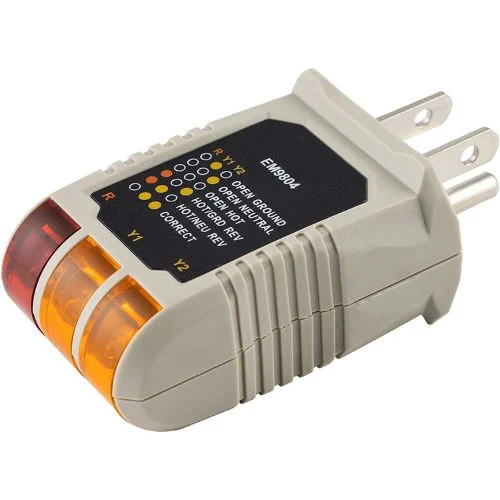
Are you looking for a power tester that will take the guesswork out of your wiring concerns? Look no further! With this power receptacle tester, you can detect probable improper wiring conditions in standard voltages of 110-125 outlets quickly and accurately.
Specifications
- Voltage Range:110-125 V
- Power source: Corded Electric
- LED indication: Yes
- LED: No
Features:
- Detect wiring problems
- Easy-to-use receptacle tester
- ETL listed for safety
- Backed by the highest performance
- Quick and easy to read
- Six probable wiring charts included
Don’t let outdated or faulty wiring ruin your day – let this receptacle tester ensure that your wiring is up to the task! This simple and effective tool lets you keep your peace of mind (and energy bills) in check. Power on with power gear!
What Works?
- My hands-on research revealed that the LED indicators provided clear and easy-to-read feedback, making it quick to assess outlet conditions.
- I noticed how compact and lightweight the tester was—perfect for carrying around in my toolkit without adding bulk.
- In my personal trial, I appreciated the straightforward design—no need for technical expertise, just plug it in and get instant results.
- The ETL listing gave me extra confidence in its safety and performance, knowing it met important safety standards.
What Doesn’t?
- I did find that it’s limited to testing standard 110-125 VAC outlets, which meant I couldn’t use it for higher voltage systems.
Package Includes:
- Power Gear Receptacle Tester
- Instruction Manual
Why It Matters?
I picked the Power Gear Receptacle Tester because it offered simplicity, reliability, and safety in one package. The clear LED indicators and intuitive design made it easy to use, and the ETL listing reassured me about its quality. Whether for quick home checks or on-site inspections, it’s a tool I trust to get the job done.
Conclusion
Congratulations! You made it to the end. Now that you know how to use an electrical outlet tester, you are ready to ensure all your outlets are in safe and working order. This knowledge can help protect you and your family from electric shock or other potentially dangerous situations. So now that you have brushed up on your electrical skills go out and test those outlets! Good luck, and stay safe!
FAQS
Q1.How does the outlet tester test ground?
An outlet tester tests ground using a three-prong plug, which is connected to electrical wires designed to measure the current flowing through them. The three prongs on the plug represent hot (H), neutral (N), and ground (G). When testing for ground, the device sends an electric signal through the G prong, which should have a zero voltage when properly grounded.
If there is a problem with the ground connection, the voltage reading will be higher than it should be. This lets the user know that further investigation may be required to determine what is causing the issue.
Q2.How do you test an electrical outlet?
To test an electrical outlet, you should ensure its power is turned off. Then, use a voltage tester to check whether the outlet receives any electrical current. To do this, insert one lead of the tester into each slot on the outlet. If there is electricity present, the tester will light up or make a sound indicating the presence of power. If it does not light up or make any noise, then no electricity is present, and you may need to investigate further.
Q3.Is an outlet AC or DC?
An outlet is typically AC (Alternating Current). Most outlets in homes, businesses, and other places provide AC electricity. DC (Direct Current) power is rarely used in the home or public buildings. However, it is common to find DC power sources such as batteries in many electronic devices like phones, laptops, and cameras.
Q4.Which side of the outlet is hot?
The hot side of an electrical outlet is usually the shorter prong. This can be identified by the vertical line on the plug, indicating the hot side. It is important to ensure you plug in appliances and other devices correctly, as incorrectly wiring them may lead to a short circuit or even electrocution.
Q5.What is the voltage of a wall outlet?
The voltage of a wall outlet depends on the socket type and geographic location. In the United States, most wall outlets have 120 volts of electricity. However, some areas may have 220-240 volt outlets instead. To make sure you know the voltage of your home’s wall outlets, it is important to check with a qualified electrician.
Q6.Which wire is positive?
The positive wire is usually the one that is red or has a “+” sign on it. It is also referred to as a “hot” wire. On the other hand, the negative wire is usually black or white in color and has a “-” symbol on it. Be sure to double-check before making any connections, as getting the wires wrong can cause damage to your equipment and be dangerous.