
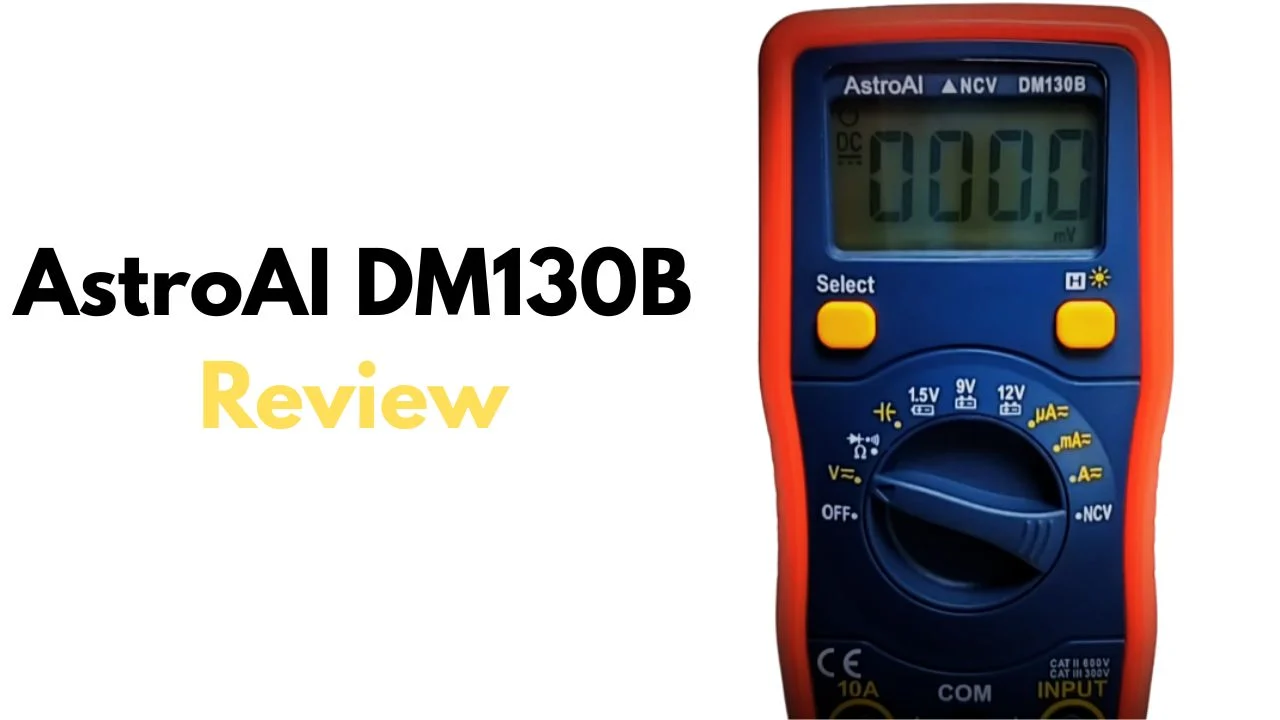

When you need consistent work done in less time, AstroAI DM130B is the best model. This multimeter is best for a quick DIY continuity check or a complex problem. The durable design and consistent readings are ideal for long days in the field or tinkering in the garage. It’s a solid budget-friendly option, and this AstroAI DM130B Review will help you in understanding each feature of this digital multimeter.
| Quick Look: In my personal trial, I found the AstroAI DM130B Multimeter to be a solid, budget-friendly choice for both quick DIY fixes and more intricate troubleshooting. The NCV function really stood out, giving me peace of mind when working with electrical systems. It’s easy to use, reliable, and durable definitely the kind of tool I’d grab for most electrical tasks. |
Why Should AStroAI DM130B be Your First Choice?
The AstroAI Digital Multimeter has a variety of settings and accurately measures AC/DC Voltage, AC/DC Current, Resistance, Continuity, Capacitance, and Diodes (1.5, 9, 12V Battery). Its non contact safety design eliminates all safety concerns from your mind. It has a backlit LCD, making it easier to use in dimly lit and brightly lit environments. Additionally, for a more comfortable troubleshooting experience, combine the integrated kickstand and Data Hold function. It can also be used to inspect audio quality when checking speakers. That is why buying DM130B will not make you regret your choice.
A Quick Look
AstroAI DM130B Multimeter Review-A Versatile Tool
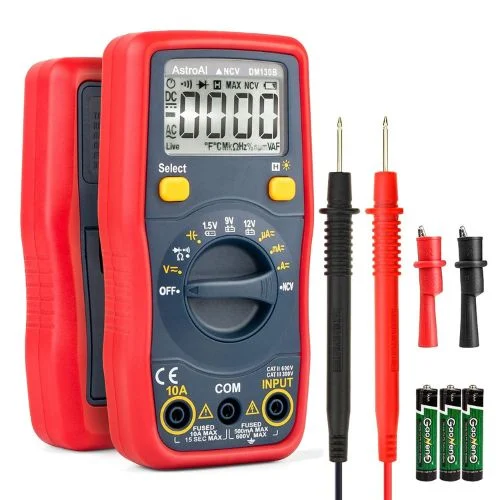
This DMM was created with your safety in mind. The NCV Function reduces exposure to electrical cables; the device can be used on outlets, sockets, terminals, and other devices.
NOCO Boost Plus GB40
⭐ 4.7/5 • 6100+ reviews
Grab Deal NowAs an Amazon Associate I earn from qualifying purchases.
Small details like a Data Hold, a Large Backlight LCD Screen, a Kickstand, and a Low Battery Indicator help get the job done better and faster when using a Multimeter.
Features
What Works:
- I noticed the meter comes with versatile settings that made switching between tasks feel seamless.
- In my personal trial, it operated quickly and safely, which gave me confidence while testing.
- My hands-on research revealed that the low battery indicator kicks in right on time no unexpected power losses so far.
What Doesn’t:
- I found it less effective for some automotive troubleshooting. The readings weren’t as reliable under the hood, especially in more complex setups.
First Impressions & Unboxing
I unboxed the AstroAI DM130B on April 3rd, 2025, and my first impression was a solid one. The multimeter was well-protected, sitting securely in the box, and everything I needed was neatly organized. The packaging was straightforward, with no excessive waste, which I appreciate. The user manual was the first thing I pulled out, and as I flipped through it, I noticed it was clear and direct, making it easy to follow.
I was immediately drawn to the multimeter itself. It has a compact yet robust design, with a soft rubber casing that felt comfortable in my hand. The LCD display was clear, and the backlight feature stood out, especially since I often work in dim lighting. It was a relief to see that it wasn’t just a basic, hard-to-read screen like some budget models.
What’s in the Box?
When I unboxed the AstroAI DM130B, here’s what I found packed neatly:
- 1× User Manual
- 1× Pair of Test Leads
- 1× Organizer Bag
- 1× AstroAI DM130B Digital Multimeter
As I pulled each item out, it felt like I was getting everything I needed to start testing electrical systems, from the clear manual to the sturdy test leads. I appreciated how AstroAI made sure that even the small details were accounted for like the kickstand for hands-free operation and the data hold feature for capturing readings.
I turned on the multimeter, and the LCD screen lit up with no lag. The interface was intuitive, and I could immediately jump between measuring AC/DC voltage, current, resistance, and even continuity with ease. It felt solid and dependable exactly what I need for both quick DIY fixes and more involved electrical troubleshooting.
Design And Built
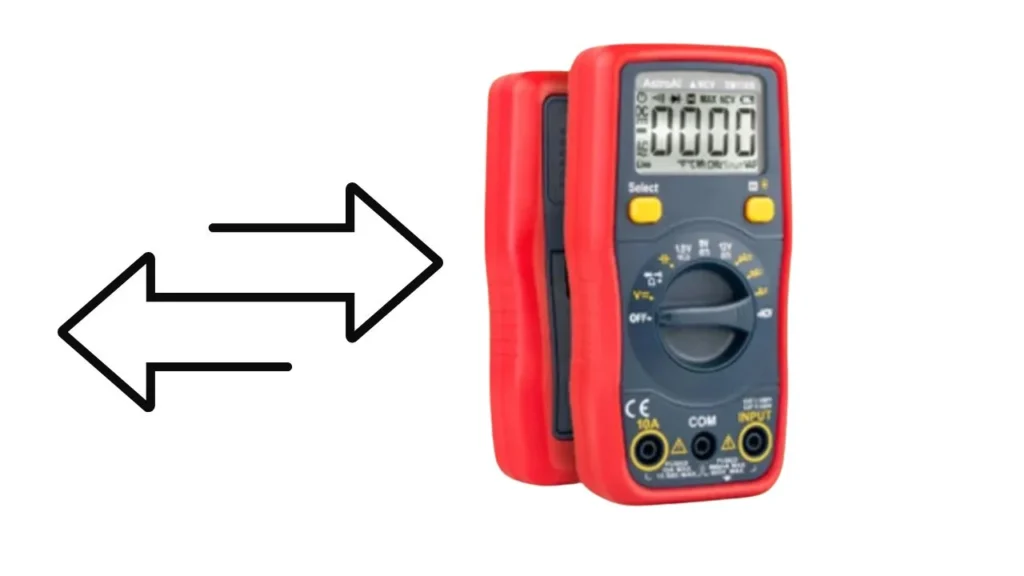
The DM130B model multimeter is designed with the safety first rule. It is built with an Anti-Burn double ceramic fuse and thermistor protection circuit. Its two integrated fuses, rated at F500mA/600V and F10A/600V, can effectively protect the multimeter. Moreover, the NCV Function reduces exposure to electric cables; the probe works with plugs, connectors, and other devices.
Button Functions on the AstroAI DM130B
I’ve spent plenty of time with compact multimeters, but the AstroAI DM130B Review really surprised me with how simple and purposeful the button layout is. It’s a small unit, but it packs just the right amount of functionality to keep my workflow smooth. Here’s how I actually use the buttons:
- Select (Yellow Button)
This one sits on the left, and I probably press it more than any other. It’s how I toggle between modes within a single dial setting. Say I’m measuring voltage—pressing this lets me switch between DC and AC without touching the dial. Same goes for current (µA/mA) or resistance and continuity. One press, and I’m in the mode I need. - Hold / Backlight (Yellow Button with ‘H’ and Light Icon)
On the right side, this button does two jobs. A quick tap holds the current reading on the screen—something I use all the time when I’m checking readings in tight spots and can’t keep my eyes on the display. Hold it down a bit longer and the backlight kicks in. It’s a lifesaver during late-night garage work or dim electrical panels.
Buying Guide: Who Should Pick the AstroAI DM130B Multimeter?
After hands-on testing with the DM130B, I realized this isn’t just another budget tool it’s actually built for users who want reliable performance without the complexity or high cost. Whether you’re just starting out or need a dependable backup meter, especially for tasks like testing a 220V outlet, here’s who should really consider this model:
Beginner Electricians and DIY Enthusiasts
I’d recommend the AstroAI DM130B Review straight away to anyone just stepping into the world of multimeters. It’s easy to operate, and the display is large and backlit, which made my first-time tests feel smooth and stress-free. No confusing menus or steep learning curves.
Homeowners Doing Everyday Troubleshooting
This model helped me test outlets, appliance circuits, and even wall switches with ease. The NCV feature especially made household checks safer I didn’t have to mess with leads just to check if a line was live. That’s a huge plus for safety-conscious users.
Anyone Who Needs a Fast, On-the-Go Tester
Since it’s lightweight and comes with features like the Data Hold, kickstand, and low battery indicator, I found it perfect for quick jobs in tight or awkward spots. It’s the one I’d toss in my bag for quick runs to fix minor home or office issues.
Those Who Prioritize Safety
My hands-on research revealed the ceramic fuses and thermistor protection add a real layer of safety, especially when dealing with older systems or potentially unstable circuits. The NCV feature also helps limit physical contact with live wires making it a solid option for cautious users.
Not Ideal For:
I noticed it underperformed slightly with complex automotive diagnostics. If you’re frequently working with vehicles or sensitive electronics, you might want something more robust, maybe a higher-end AstroAI DM130B Review or even a Fluke model.
Conclusions
The AstroAI 130B Multimeter has been intended to troubleshoot automotive and household electrical issues. It’s simple and safe to use, with many different functions for measuring current, voltage, resistance and continuity, transistor, and diode testing for automotive and household applications.
Moreover, you can easily choose it as a multipurpose device for troubleshooting all electrical problems though some users may also consider a Fluke multimeter for more advanced automotive tasks. Hopefully, you love this AstroAI DM130B Multimeter Review.
FAQs
Q1.Can I use the multimeter to measure the capacitors?
Yes, you can check the capacitor measurements, which are accurate and simple to use. In addition, the NCV function saves time and makes it convenient to use anywhere.
Q2.How do I perform a continuity test with a DM130B multimeter?
Connect the test leads to two points on the tested circuit. When the line is connected, the built-in buzzer sounds, and the value appears on the LCD screen.
Q3.How does NCV function in a multimeter?
NCV is an abbreviation for non-contact voltage detection. Finally, place the probe near outlets or sockets to test voltage presence without using leads.
Q4. Is the AstroAI DM130B suitable for beginners?
Yes, it’s a great choice for beginners. The user-friendly interface, clear backlit display, and auto-ranging feature make it easy to use, even if you’re new to electrical testing.
Q5. Can I use the DM130B for household appliance testing?
Absolutely! It’s ideal for diagnosing common household issues like checking wall outlets, batteries, and appliance circuits. The non-contact voltage detection also adds an extra layer of safety while doing so.