
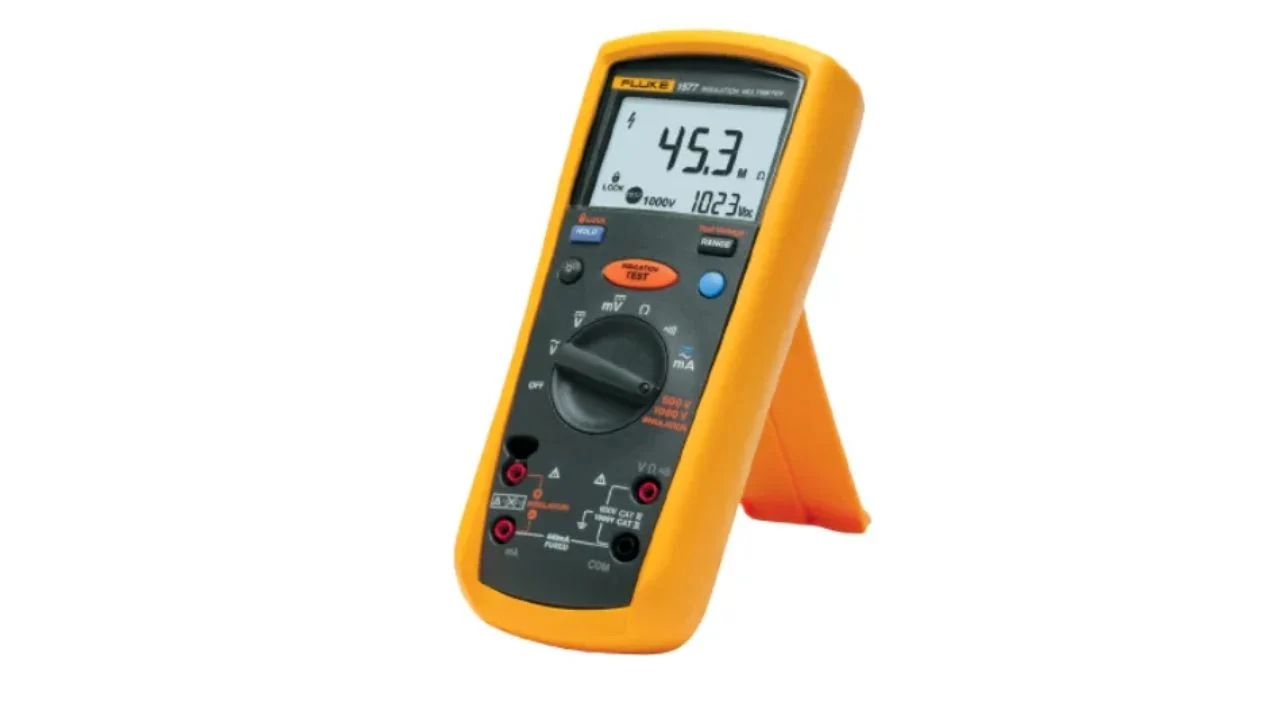

I’ve used the Fluke 1577 Insulation Tester plenty of times, and honestly, it’s one of those tools I always keep close. With 500V and 1000V test voltages, it gives super accurate readings, even when I’m dealing with tricky conditions. Measuring ignitor resistance is one of the many tasks where it proves its reliability.
One thing I really like? The safety features. The Fluke 1577 automatically discharges capacitive voltage and detects live circuits before testing, giving me extra peace of mind. No second-guessing, no unnecessary risks.
A Quick Look


Quick Look
This is exactly what I recommend to fellow electrical professionals who need trustworthy insulation testing. With selectable voltages of 500V and 1000V, plus a broad resistance range from 0.1 MΩ to 600 MΩ, it’s become my go-to tool for insulation diagnostics. I trust its advanced safety features, including live circuit detection and auto-discharge of capacitive voltage, for safe and smooth operation every time.
NOCO Boost Plus GB40
⭐ 4.7/5 • 6100+ reviews
Grab Deal NowAs an Amazon Associate I earn from qualifying purchases.
First Impressions & Unboxing
Unboxing Experience
The moment I got my hands on the Fluke 1577 Insulation Tester, I could tell it was built tough. The box felt sturdy, and inside, everything was well-packed. Fluke didn’t skimp on protection each item was neatly secured, preventing any damage during shipping.
What’s in the Box?
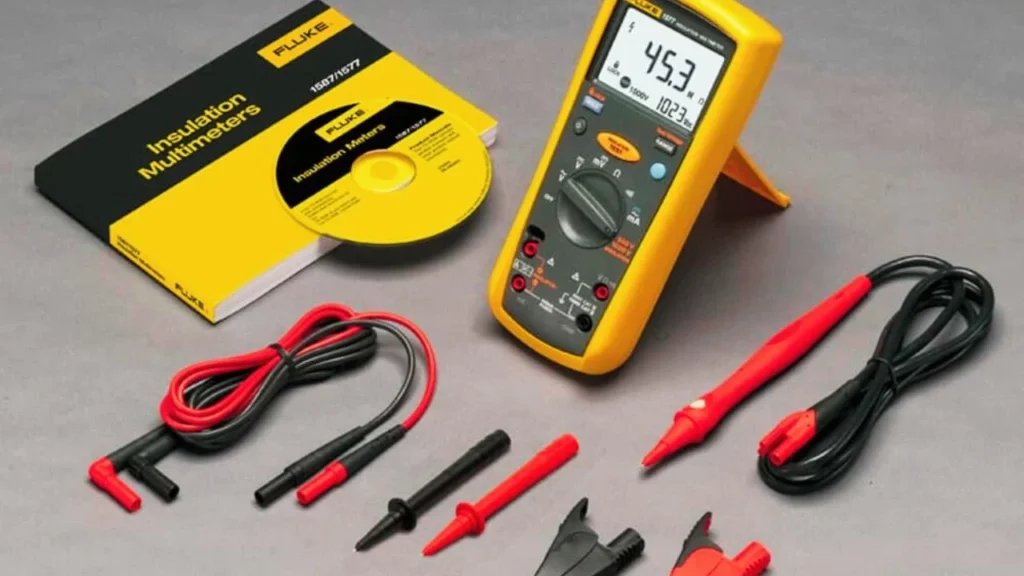
Inside the box, I found:
- Fluke 1577 Insulation Tester (weighs 624g / 1.38 lbs)
- Two TL224 test leads and insulated alligator clips
- User manual with detailed safety guidelines
- Pre-installed 9V battery (expected to last up to 200 hours of use)
Having the battery already included was a nice touch no scrambling to find one before testing!
Build Quality & Design
Holding the tester, I immediately noticed its rugged, rubberized casing. The diagnose a switch manually design ensures it can handle a 1-meter (3.3 ft) drop, which is great because I’m not exactly the most careful with my tools. The large 3.5-inch backlit LCD display is easy to read, even in dimly lit spaces. The buttons feel solid and well-placed, and the rotary switch has seven clearly labeled positions, making it easy to select the right function.
Final Thoughts
Overall, my first impression? This thing feels like a true workhorse its compact yet durable design makes it practical for daily use. Everything in the box is high quality just what you’d expect from Fluke. If the CAT IV 600V safety rating and insulation testing up to 1000V are any indicators, this tester means business.
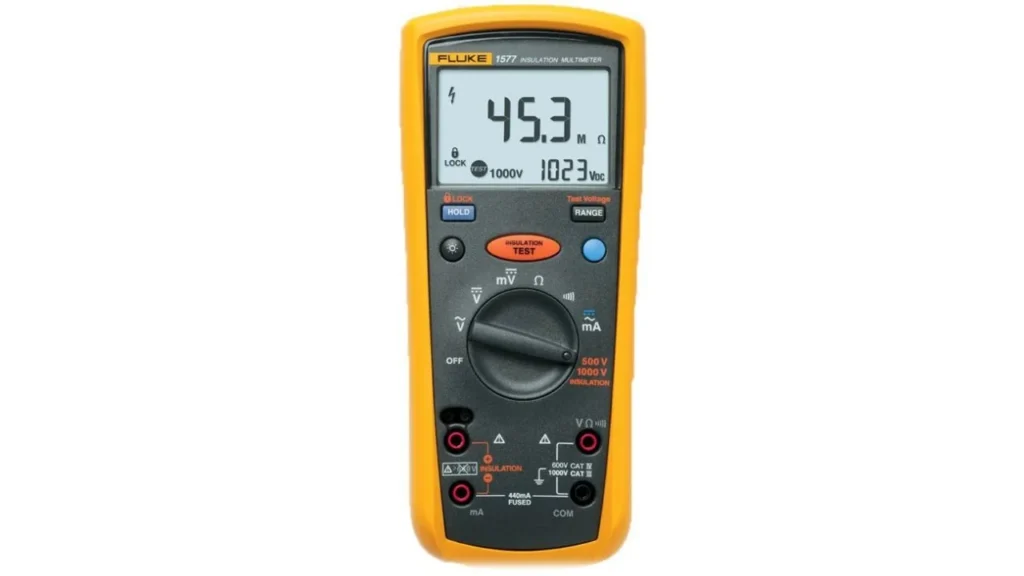
Fluke 1577 Insulation Tester Buttons: What They Do
When I first started using the Fluke 1577 Insulation Tester, I appreciated how the buttons were intuitively placed and easy to use. Here’s a quick rundown of the 7 buttons and how each one helps during testing.
- Power Button (ON/OFF):
Simple and reliable—press to turn on and hold to turn off. It’s quick and gets me started right away. I’ve never had any issues with it, and it’s always responsive. - Test Voltage Button:
This lets me select between 50V, 100V, 250V, and 500V for different insulation tests. It’s essential for flexibility when testing various equipment. I use this frequently to adjust for the right voltage depending on the job. - Range Button:
I use this to adjust the resistance measurement range. It’s helpful when I need to fine-tune results for different insulation types. This button helps me get accurate readings, whether I’m testing high or low resistance. - Resistance Measurement Button:
This starts the insulation resistance test. It’s direct and easy to use for accurate measurements. Once I press it, I know it’s time to get the real data I need for reliable results. - Hold Button:
The hold button freezes the measurement, which I find super useful when I need to record results without rushing. It’s perfect for capturing a reading when I’m in an awkward position or dealing with busy test areas. - Backlight Button:
I press this when working in low light. It brightens the display, making readings clear even in dim conditions. This feature has saved me more than once when I’ve had to test in poorly lit areas. - Mode Button:
The mode button switches between test modes, like insulation resistance and continuity, allowing me to adjust based on what I’m testing. I find it essential for quickly moving between different test types with minimal hassle.
Key Feature
✔ Selectable Insulation Test Voltages – I can choose between 500V and 1000V, making it flexible for different jobs.
✔ Wide Insulation Resistance Range – It measures from 0.1 MΩ to 600 MΩ, which is perfect for diagnostics.
✔ Live Circuit Detection – If voltage above 30V is present, the meter blocks the test, keeping me safe
✔ Auto Discharge for Safety – It automatically gets rid of capacitive voltage, so I don’t have to worry about shocks.
✔ AC/DC Voltage Testing – This meter works for both, making it a handy all-in-one tool.
✔ DC Millivolt Function – Great for precise, low-voltage measurements.
✔ Resistance & Continuity Testing – Helps me troubleshoot electrical issues quickly.
✔ Large LCD with Backlight – I can see readings clearly, even in dim workspace.
✔ Three-Year Warranty – Fluke stands behind this meter, which gives me peace of mind.
✔ Auto Power-Off – Saves battery by shutting off when I forget to turn it off.
✔ High Safety Ratings – With CAT III 1000V and CAT IV 600V, I know I’m using a safe, reliable tool.
Specifications
This Insulation Tester offers comprehensive testing, with a maximum DC voltage of 1000V and an accuracy of ±(0.2%+2). It provides a resolution of 0.001V for precise voltage measurements. The AC voltage testing range also goes up to 1000V, with an accuracy of ±(2%+3) and a resolution of 0.1 mV, ideal for monitoring power systems.
For current testing, the Fluke multimeter measures up to 400 mA in both DC and AC modes, with DC current accuracy of ±(1.0%+2) and AC current accuracy of ±(2.0%+2). You can check the blower motor with fluke1577 to ensure proper functionality, with a maximum resolution of 0.01 mA, ensuring reliable current measurements for various applications. Additionally, it handles resistance up to 50 MΩ with an accuracy of ±(1.2%+2) and a resolution of 0.1Ω, making it ideal for insulation testing.
Hands-On Testing & Performance

Putting It to the Test
The first thing I wanted to know? Can this thing actually handle the real-world stuff I deal with daily? So, I threw it at 120V, 240V, and even 480V circuits—and it didn’t flinch. The insulation test was a breeze on motor windings, cables, and panels, giving me rock-solid readings up to 600 MΩ. No weird fluctuations, no second-guessing just reliable numbers every time.
How It Handles Voltage & Circuit Checks?
Measuring AC/DC voltage up to 1000V? Check. Resistance up to 50 MΩ? Easy. The auto-ranging kicked in smoothly, so I didn’t have to keep switching settings. I ran it through an industrial control panel, and guess what? It nailed every insulation resistance reading, even under high voltage.
Let’s Talk Safety Because That’s a Big Deal
I don’t take chances with safety, and Fluke clearly doesn’t either. This meter is rated CAT IV 600V and CAT III 1000V, meaning it can handle unexpected voltage spikes without frying. The CAT Ratings are crucial for ensuring safe operation in various environments. And here’s a cool feature: the insulation test lock-out. Basically, it won’t let you run an insulation test if the meter is connected to a live circuit a simple but genius way to prevent major accidents.
How It Stacks Up Against Others?
I’ve used a few insulation testers before like the Klein MM600 and the Megger MIT300 but the Fluke 1577 hits the sweet spot. Megger might be better for hardcore insulation-only testing, but Fluke gives you both a multimeter and an insulation tester in one device. That’s a win in my book.
Built Tough for Real Work
Dropped it? Yep, from about a meter up, and it’s still good as new. The 3.5-inch backlit display is super clear, even in dimly lit job sites. And the battery life? I ran it for four straight hours, and it barely made a dent in the 200-hour battery life. So, no scrambling for fresh batteries every week.
Who Should Buy This Multimeter?
If you’re wondering whether the Fluke 1577 is the right fit for you, let me break it down. After using it myself, I can say this isn’t just another multimeter it’s a solid, reliable tool that combines standard measurements with insulation testing. Whether you’re a pro or a hands-on DIYer, here’s who will get the most out of it:
✔ Electricians – If you’re constantly diagnosing wiring issues or making sure circuits are safe, this multimeter has your back.
✔ Engineers – Working with high-voltage systems? With insulation resistance testing up to 600 MΩ, this meter helps you stay compliant and avoid major electrical failures.
✔ DIY Enthusiasts – If you love tackling electrical projects at home, this tool makes testing circuits, finding faults, and ensuring safety a whole lot easier.
✔ Maintenance Technicians – Perfect for those who deal with motors, cables, and switchgear. It saves time by combining two essential tools in one.
✔ Construction & Industrial Workers – Built for heavy-duty electrical work, this model comes with a CAT III 1000V and CAT IV 600V safety rating, so you know you’re working with a safe and durable device.
Situations Where It Excels
I found it super useful for testing motors, circuits, and high-voltage components. With an insulation resistance range up to 600 MΩ, it’s great for diagnosing electrical issues, which sets it apart from a low-cost multimeter that may not handle these tasks as effectively.
How It Compares to Alternatives
Unlike basic multimeters, this one has a built-in insulation tester, so you’re not stuck carrying two tools. It’s a huge time-saver and makes troubleshooting way easier.
User Opinions
John A.: “The Fluke 1577 is a fantastic tool for insulation testing. It’s easy to use and provides reliable results every time. The safety features are a big plus, too.”
Emily R.: “I’ve been using this multimeter for a few months, and it’s been excellent. It handles everything from voltage testing to insulation resistance with accuracy and ease.”
Martin L.: “This is a must-have tool for anyone in the electrical industry. The backlit display makes it easy to read, and I feel confident in the results it provides.”
Carlos M.: “It’s a great investment. It’s robust, user-friendly, and offers a range of functions that I use regularly in my electrical work.”
Final Words
The Fluke 1577 Insulation Tester is an essential tool for electrical professionals who require precise and reliable measurements. With its wide range of features, including selectable test voltages, insulation resistance measurement, and comprehensive voltage and current testing, it stands out as an all-in-one solution for electrical diagnostics.
Its safety features, such as live circuit detection and auto discharge of capacitive voltage, ensure user protection while working in challenging environments.
FAQs
How does the live circuit detection work on the Fluke 1577?
This Fluke multimeter is equipped with live circuit detection that prevents insulation testing if the circuit is live. When a voltage above 30V is detected, the meter automatically disables the insulation test to ensure safety.
This feature helps prevent the risk of electrical shock and equipment damage by ensuring that insulation resistance measurements are only taken on de-energized circuits. This function is especially valuable for professionals working in industrial or commercial settings, providing peace of mind when conducting insulation tests on potentially live circuits.
Can the Fluke 1577 be used for both insulation testing and regular voltage/current measurements?
Yes, the Fluke 1577 can be used for both insulation testing and regular voltage/current measurements. It’s designed with selectable insulation test voltages of 500V and 1000V for assessing insulation resistance, as well as the ability to check voltage, DC millivolts, and AC/DC milliamps.
This multi-functional capability makes it a comprehensive tool for electrical professionals who need to perform a variety of tests on electrical systems, ensuring accuracy and efficiency without the need for multiple instruments.
What type of battery does the Fluke 1577 use, and how long does it last?
It operates on standard AA batteries, which are easily replaceable. The battery life can vary depending on usage, but the meter is designed to be energy-efficient. With features like auto power off, the meter helps conserve battery life when not in use.
The battery can last for a long time under typical working conditions, but it’s always a good idea to carry spare batteries, especially for extended fieldwork or testing in remote locations. The low battery indicator alerts users when it’s time to replace the batteries.
Is the Fluke 1577 suitable for outdoor use in harsh conditions?
Yes, this is built to handle tough conditions. With a rugged design and an impact-resistant body, it is ideal for outdoor and industrial use. It features a CAT III 1000V and CAT IV 600V safety rating, ensuring protection against high-voltage environments.
Additionally, the large LCD display is backlit, making it easy to read in low-light conditions, such as outdoor or dimly lit work areas. Whether you’re testing electrical systems in factories, construction sites, or outdoor locations, it is durable and reliable in challenging conditions.
Can the Fluke 1577 perform insulation testing on high-voltage systems?
Yes, this multimeter is capable of performing insulation testing on high-voltage systems. It provides selectable test voltages of 500V and 1000V, making it suitable for testing insulation resistance on a wide range of electrical systems, including high-voltage equipment.
This feature is essential for professionals who need to ensure the integrity of insulation in cables, motors, transformers, and other electrical components. The Fluke’s ability to test up to 600 MΩ of resistance ensures accurate readings, even on large systems, making it a valuable tool for ensuring electrical safety and performance.