


At first, the Fluke 175 ESFP felt like a headache. Not because it’s bad, just because I wasn’t sure if I really needed to spend that much on a multimeter. But after using it? Man, I get it now. This thing is tough, crazy accurate, and just works. Thanks to its True-RMS measurements, I don’t have to second-guess my readings, even when dealing with messy signals. I’ve found Fluke 175 great for tasks like checking blower motor operation.
The best part? It’s way easier to use than I expected. It fits perfectly in my hand, the buttons are intuitive, and I didn’t have to waste time figuring it out.
A Quick Look
Quick Look
This multimeter offers True-RMS AC and DC voltage measurements for precise accuracy. It features a durable build with an ergonomic, protective case for long-lasting use. With both manual and automatic ranging, it ensures versatility for various applications.
NOCO Boost Plus GB40
⭐ 4.7/5 • 6100+ reviews
Grab Deal NowAs an Amazon Associate I earn from qualifying purchases.
First Impressions & Unboxing
Unboxing Experience
When I first got my hands on the Fluke 175 ESFP, I wasn’t sure if it would live up to the hype. Fluke tools are built tough, but was this one really worth the price?
Inside the box, I found:

- Fluke 175 ESFP Multimeter (feels solid and well-built)
- Test leads (high quality, just as expected)
- User manual (clear and useful)
- 9V battery (pre-installed) (so it’s ready to go)
The packaging was simple but sturdy, keeping everything safe during shipping.
Build Quality & Design
The first thing I noticed? This thing is built like a tank, perfect for tasks like checking furnace gas. No flimsy plastic just that classic Fluke ruggedness. It’s got a nice weight to it, but it’s not bulky.
Display & Buttons
The screen is crisp and easy to read, even under bright light. The button layout is intuitive, so I didn’t have to fumble around to get started. No unnecessary extras just a clean, practical design that gets the job done.
Key Features
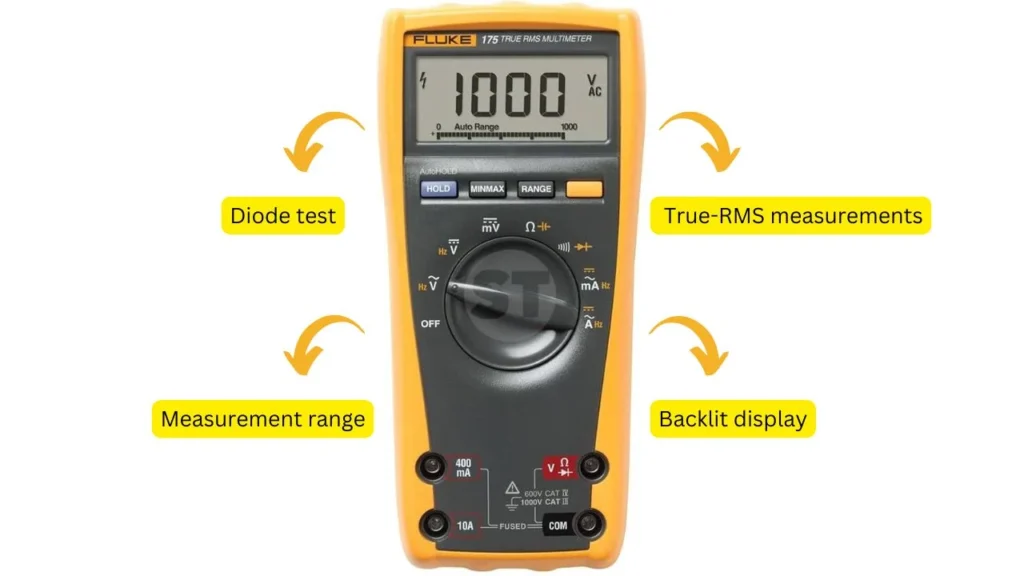
- The Fluke 175 ESFP offers True-RMS measurements for accurate AC voltage and current readings, even on non-linear loads.
- It features a wide measurement range, including voltage, current, resistance, frequency, and capacitance.
- You can choose between manual and automatic ranging for added flexibility and convenience.
- The Min/Max recording function captures variations in readings over time with ease.
- This multimeter includes a diode test feature for checking diodes and continuity.
- Its large backlit display ensures clear visibility, even in low-light environments.
- Fluke designed this device with a durable build and an integrated holster for added protection.
- The ergonomic design makes it comfortable to handle during extended use.
- With CAT III 1000V and CAT IV 600V safety ratings, it’s reliable in demanding environments.
- You’ll also appreciate the long battery life and low-battery indicator for uninterrupted use.
Specifications
The Fluke Multimeter for Electricians has various specifications to help with electrical measurements. It can measure both DC and AC voltage with a maximum of 1000 V. It is very accurate, with small measurements, down to 0.1 mV. For current measurements, it can measure both DC and AC currents, with a maximum of 10 A and a resolution of 0.01 mA.
It also measures resistance (up to 50 MΩ) and capacitance (up to 10,000 µF), both with small measurement limits, like 0.1 Ω and 1 nF. The frequency can be measured up to 100 kHz with a resolution of 0.01 Hz.
The operating temperature range is from -10°C to +50°C, and it can be stored between -30°C to +60°C. It can work in humid conditions, with 0% to 90% humidity at lower temperatures.
The multimeter meets safety standards for overvoltage protection, with categories up to 1000 V for CAT III and 600 V for CAT IV. It has UL, CSA, and TÜV approvals, ensuring safety. The device is lightweight (420 g) and has a battery life of about 200 hours without backlight.
Hands-On Testing & Performance
Alright, so I put the Fluke 175 ESFP to the test, and honestly? It handled everything like a champ. I used it for voltage, resistance, and continuity tests, and the readings were quick and spot on. No weird delays, no second-guessing just solid results every time.
Testing Different Voltages & Circuits
Budget jump starters come in handy, especially when testing low-voltage DC circuits (around 5V for basic electronics). Then I cranked it up to higher-voltage AC circuits (up to 600V). This thing didn’t flinch. The True-RMS feature made sure I got accurate readings even with fluctuating signals—no random number jumps or guesswork.
Continuity testing? Super fast. The beep is loud enough to hear even in a noisy garage, which is a huge plus. I’ve used meters that make you wait a second before beeping—this one? Instant response.
How It Stacks Up Against Other Multimeters
Compared to other meters in this price range, the Fluke 175 ESFP just feels better. I’ve used budget models that take forever to stabilize or throw off weird readings.
Who Should Buy the Fluke 175 ESFP?
Ideal Users
If you’re someone who needs a reliable multimeter without unnecessary extras, the Fluke 175 ESFP is for you. It’s great for:
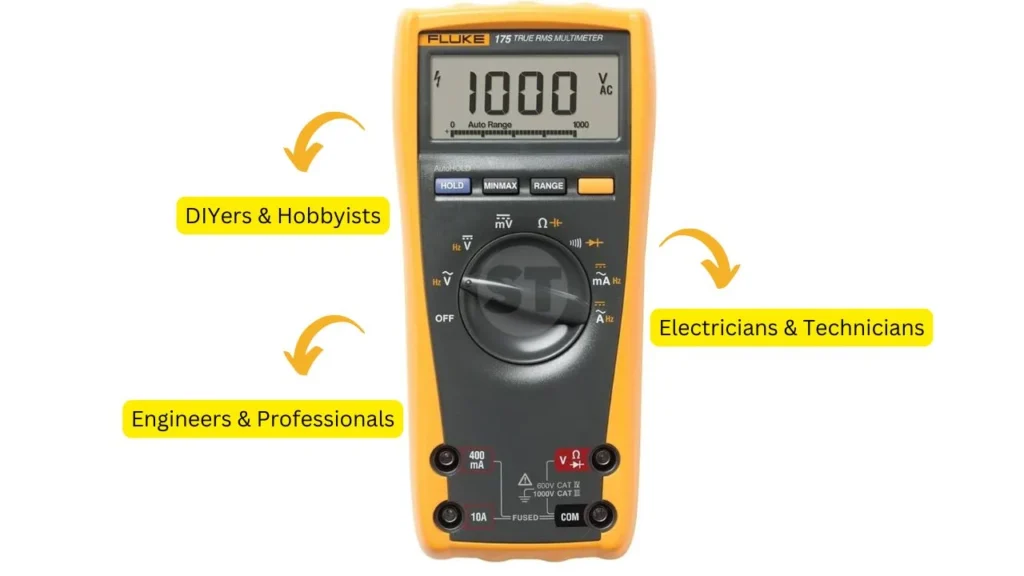
- DIYers & Hobbyists – If you tinker with electronics or do your own home electrical work, this meter makes life easier.
- Electricians & Technicians – Whether you’re troubleshooting a panel or working on appliances, this thing is accurate and tough.
- Engineers & Professionals – If precision matters in your job, you’ll appreciate the True-RMS readings and quick response.
When It’s the Best Choice
The Fluke 175 ESFP shines in situations where accuracy and durability matter. If you need a meter that can:
✅ Handle daily electrical tasks without glitching.
✅ Give fast, accurate readings in different environments.
✅ Last for years without feeling outdated.
Then this is the perfect pick. However, if you need wireless connectivity or data logging, you might want to check out models like the Fluke 375 FC instead.
User Opinion
Michael T.: “This multimeter is incredibly precise and reliable. It’s a great tool for anyone who needs accurate measurements. I suggest getting a protective case for transport.”
Samantha J.: “I’ve used Fluke meters for over 20 years, and this one is my favorite. It’s durable and accurate. The frequency measurement feature is especially useful.”
David L.: “The Fluke 175 is an excellent multimeter. It’s rugged and easy to use. However, the test leads feel a bit cheap, and the continuity beeper is too quiet.”
Emily R.: “This multimeter is dependable, like all Fluke products. Shipping was fast, and it arrived just in time. I highly recommend this model for anyone in need of accuracy.”
Final Words
The Fluke 175 ESFP is a versatile and reliable multimeter, ideal for both professionals and enthusiasts. With its True-RMS accuracy, ergonomic design, and user-friendly features, it’s well-suited for diagnosing electrical problems in a variety of environments, from industrial machinery to household circuits.
Whether you’re troubleshooting complex equipment or simply need accurate readings for everyday use, the Fluke 175 ESFP is a solid, durable investment that guarantees long-lasting performance in electrical testing.
FAQs
Is the Fluke 175 ESFP waterproof or water-resistant?
The Fluke 175 ESFP is not waterproof or water-resistant. Its rugged casing offers protection against drops and bumps, but if you need to check a temperature sensor, it’s important to use a protective case in wet conditions. It is designed to be durable and can withstand harsh environments such as construction sites or industrial settings, but it’s not built to be exposed to water or moisture directly. For instance, it cannot be submerged in water or exposed to rain.
How does the Fluke 175 ESFP compare to the Fluke 117 model?
The Fluke 175 is a more general-purpose model, ideal for electricians, engineers, and those who need to perform a wide variety of measurements, including capacitance and frequency.
It’s known for its accuracy and reliability in demanding environments. The Fluke 117, on the other hand, is designed with HVAC professionals in mind, featuring a built-in non-contact voltage detector and a simpler interface for those who need fast, everyday diagnostics. The 175 is bulkier with more advanced measurement capabilities, while the 117 is more compact and easier to use for specific tasks.
Does the Fluke 175 ESFP have a data logging function?
No, the Fluke 175 ESFP does not have a data logging function. It is designed for real-time measurements and testing, providing accurate readings as you use it. However, it does not store or log measurements for future reference or long-term analysis. For users who require data logging features, other Fluke models such as the Fluke 287 or Fluke 289 multimeters are better suited.
These models offer advanced data logging capabilities, including the ability to record measurements over time and store them for later review. The Fluke 175 is intended for immediate, hands-on measurements rather than long-term data collection or monitoring.
Is the Fluke 175 ESFP suitable for automotive diagnostics?
Yes, the Fluke 175 ESFP is suitable for automotive diagnostics. It is equipped to handle tasks such as checking battery voltage, testing alternators, inspecting fuses, and diagnosing electrical issues within a vehicle’s electrical system. The Fluke 175’s wide range of measurements, including voltage, current, and resistance, makes it an excellent tool for automotive electricians or DIY enthusiasts working on car electrical systems.
However, it lacks some specific features for automotive diagnostics, such as temperature or RPM measurement, which can be found in more specialized models like the Fluke 88V. Overall, the Fluke 175 provides the reliability and versatility needed for general automotive electrical troubleshooting.
How long does the battery last on the Fluke 175 ESFP?
The battery life of the Fluke 175 ESFP is approximately 200 hours when using standard alkaline batteries, with the backlight turned off. This impressive battery life makes it reliable for extended use, especially in professional settings where the tool is needed for long hours.
However, if the backlight is frequently used, or if the device is used for continuous operation over extended periods, you may want to check Christmas lights to ensure the battery is performing as expected. The battery life may be shorter under such conditions. For longer work sessions, it’s advisable to carry spare batteries or invest in rechargeable batteries. The multimeter also features an auto-off function that helps conserve battery power when not in use, extending its operational life.