


Are you looking for a quality digital multimeter that comes with a case? If so, the KAIWEETS KM100 Digital Multimeter is a great option to consider. Moreover, this tool is easy to use and features various measurement modes. Just like the Milwaukee GIDDS2-288935 Digital Multimeter it offers solid performance for everyday electrical tasks. Plus, it comes with a carrying case, which makes it easy to take with you wherever you go. Read on for more information about this handy little tool.
| Quick Look: I’ve been using the KAIWEETS KM100 Multimeter for my daily electrical checks, and it’s become my go-to tool. With its compact case, clear digital display, and solid accuracy, I can test voltage, current, and resistance easily. It even handles continuity and diode checks without hassle. The case and backlit screen make it perfect for work on the go. |
How to use KAIWEETS Digital Multimeter?
A KAIWEETS KM100 Digital Multimeter is a versatile tool that you can use to measure various electrical properties, such as voltage, current, and resistance. While many different models are on the market, they all follow the same basic steps. However, first, connect the red lead to the positive terminal and the black lead to the negative terminal. Then, select the preferred function and range.Following the process of using a multimeter to test wires for power helps ensure accurate results. Finally, take the measurement and read the display. So, with a little practice, anyone can learn to use a digital multimeter to troubleshoot electrical problems.
A Quick Look
KAIWEETS KM100 Multimeter Review
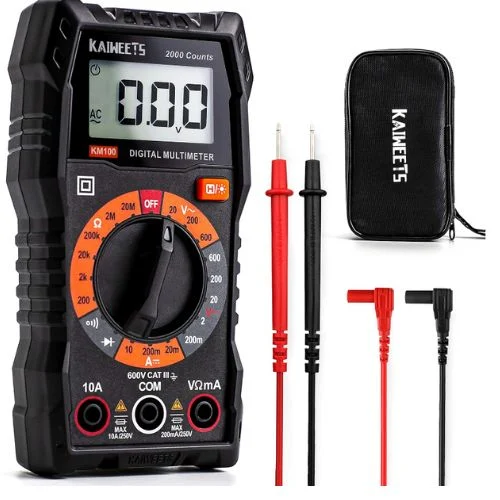
The KAIWEETS KM100 Multimeter is a versatile and easy-to-use tool perfect for testing household outlets’ electrical properties, automotive batteries, and more. It offers the functionality of both a multimeter and voltmeter, making it suitable for a wide range of tasks. The unit has a case, DC AC voltmeter, ohm volt amp test meter, and continuity test diode voltage tester, all of which are housed in a durable and compact case. The multimeter has a large digital display that is easy to read, and the unit comes with double fuses for extra safety. Furthermore, the KAIWEETS Digital Multimeter is an essential tool for any home or garage.
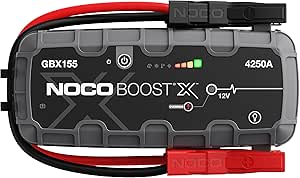
NOCO Boost Plus GB40
⭐ 4.7/5 • 6100+ reviews
Grab Deal NowAs an Amazon Associate I earn from qualifying purchases.
Features
What Works
- I can easily test both AC and DC voltage with this multimeter, which gives me the flexibility to handle a variety of tasks.
- Testing DC voltages is a breeze, and I never had trouble getting accurate readings.
- I also found it handy for testing resistance, continuity, and diode measurements—made troubleshooting circuits much easier.
What Doesn’t
- I’ll be honest, it was a bit tricky to get the hang of at first. The interface could be more intuitive.
- The CAT rating is on the low side, which made me a little cautious when working with higher voltage systems.
How to Use the Buttons on Kaiweets KAIWEETS KM100 Like a Pro
After putting the KAIWEETS KM100 Digital Multimeter through a full day of testing both in the workshop and out in the field I noticed how much thought went into its button layout. I’ve used a lot of multimeters over the years, but the button design on this one feels like it was built for real-world use, not just lab conditions.
- AUTO FUNC (Central Control)
This is where the KAIWEETS KM100 really flexes. I used this button to switch between Auto and Manual Mode depending on the task. During quick voltage checks on car batteries, Auto Mode saved me time by detecting AC or DC on its own. But when I was testing resistors on a breadboard, Manual Mode gave me full control over range and function no guessing, no bouncing readings. - RANGE
I’ve learned not to rely blindly on auto-ranging, especially in low-resistance circuits. The RANGE button let me lock in exactly what I needed. It came in clutch while measuring continuity in a complex wiring harness I didn’t want the meter second-guessing my inputs. - HOLD / REL
This combo was surprisingly useful in the middle of a solar panel test. HOLD let me freeze the voltage reading while adjusting leads in direct sunlight. Then I switched to REL to get a clean reference for voltage drop without resetting my whole setup. - SEL
Most multimeters try to cram too much into one rotary setting, but the SEL button kept things smooth. I used it constantly to flip between diode mode, continuity, and resistance checks without reaching for the dial again and again. - MAX / MIN
While measuring current fluctuations on a DC motor, I turned to this button to capture spikes I couldn’t catch visually. It recorded both extremes while I focused on other areas of the circuit a small feature with a big impact when precision matters.
Design of KAIWEETS Digital Multimeter
It is a reliable and accurate Tool. It comes with a case, so it is easy to transport, and it has a large digital display that is easy to read. Inded, you can use the Tool to test household outlets, automotive batteries, and continuity. It also features a backlight to use in low-light conditions. The KAIWEETS Digital Multimeter is an affordable and versatile option for those who need a reliable way to test voltage, current, and resistance.
It is designed in a way that it can measure a variety of electrical properties. It’s design easy to use, with a large digital display that makes it easy to read measurements. The multimeter also features a backlit display, which makes it easier to read in low-light conditions. Additionally, the KAIWEETS Digital Multimeter is equipped with a built-in “hold” function, allowing users to take measurements and view them at their convenience. Although, the multimeter also features an auto-off function, which conserves battery life. Overall, the KAIWEETS Digital Multimeter is a well-designed tool that will be valuable to any electrician’s toolkit.
What comes in the package?
- 1 KM100 digital multimeter by KAIWEETS
- Test Leads, two
- 1.5V in two AAA batteries
- 1 bag for multimeters
- One instruction book
Who Should Buy the KAIWEETS KM100 Digital Multimeter?
After using the KAIWEETS KM100 Digital Multimeter for various electrical tasks, I can confidently say it’s an excellent tool for both professionals and DIY enthusiasts. Here’s who will benefit most from adding this multimeter to their toolkit:
Professional Electricians
If you’re working on high-precision electrical projects, this multimeter is a great choice. I’ve used it for testing everything from household wiring to automotive electrical systems, and it has never let me down. With the KAIWEETS KM100, I appreciate its solid accuracy in measuring both AC and DC voltage, as well as continuity and resistance. It’s compact, easy to transport, and the included case ensures it stays safe while I’m on the move.
DIY Enthusiasts
For those of you who like to handle your own home electrical repairs, this multimeter offers a great balance of performance and ease of use. I’ve found the auto-ranging function particularly helpful for quickly determining voltage and resistance levels without fiddling with settings. The display is clear, and it’s intuitive enough that even if you’re new to using multimeters, you won’t feel lost.
Automotive Technicians
In my experience working on cars, the KAIWEETS KM100 Digital Multimeter is a reliable tool for automotive diagnostics. It’s ideal for checking battery voltage, testing electrical components, and troubleshooting circuits. The portability is a big plus when you’re out in the field, and the backlit display helps me read measurements clearly in dimly lit garages.
Hobbyists and Makers
If you’re building or repairing electronics, this multimeter is a must-have. I’ve used it to test components like resistors, diodes, and even troubleshoot complex circuits in DIY projects. The hold function is especially useful when I need to freeze a reading while adjusting leads or working in tight spaces.
Casual Users
For general household electrical checks, like testing outlets or appliances, the KAIWEETS KM100 Digital Multimeter is a fantastic tool to have on hand. It’s user-friendly and reliable, making it a go-to for routine tasks. Whether you’re a beginner or simply need something for occasional use, this multimeter will do the job without complicating things.
Conclusion
Multimeters are electrical test instruments that allow you to measure voltage, current, and resistance. Although they come in various shapes and sizes, they all share the ability to help troubleshoot electrical problems. The AstroAI M4KOR Multimeter is a great example of a compact and efficient tool in this category. However, the KAIWEETS KM100 Multimeter with the case is a small, lightweight multimeter perfect for everyday use. It has several useful features, including auto-ranging and data Hold modes. The case is also well-made and provides great protection for the multimeter.
FAQs
Q1.Are Kaiweets multimeters good?
There’s no doubt that Kaiweets multimeters are some of the best on the market. They’re known for their accuracy and durability and offer a wide range of features that make them perfect for various applications.
Q2.How can you tell if a multimeter is accurate?
The first is to check the calibration. Most multimeters have an adjustment screw that you can use to calibrate the Tool. So, turning the screw ensures that the needle points to zero when no voltage is present. If the multimeter is not calibrated correctly, it will give false readings. Another way to test the accuracy of a multimeter is to use a known voltage source, such as a battery.
Q3.What does 200K mean on a multimeter?
A 200K multimeter means no more than 200,000 ohms.
Q4.What are good ohms reading?
Generally speaking, readings between 0.1 and 1 Mohm are considered good, while readings above 1 Mohm are considered poor.
Q5.What does K mean on the ohm meter?
The K in ohm meter stands for kilo, a unit of measurement that equals 1,000. It’s used to indicate the level of resistance in an electrical circuit. Tools like the Klein MM600 make it easy to measure such resistance accurately and efficiently.