


I remember needing a 240V outlet and thinking, “How hard can it be?” Then I saw the $300–$1,200 price tag—ouch. How much to install a 240V outlet? depends on labor, wiring, permits, and outlet type. If it’s for an EV charger, dryer, or stove, knowing the price upfront helps. DIY can save money, but one mistake could blow a breaker or start a fire, so having the best electrical outlet tester ensures safety. In this guide, I’ll break down costs, ways to save, and when to call a pro—no fluff, just straight-up info
| Quick Look: Installing a 240V outlet costs $300 to $1,200, depending on labor and wiring. DIY is cheaper ($50–$200 for materials), but one mistake can be dangerous and costly. To cut costs, get multiple quotes, install it near the breaker, and avoid extra upgrades you don’t need. |
How Much Does It Cost to Install a 240V Outlet?

The total cost of installing a 240V outlet depends on whether you DIY or hire a professional. If you have experience with electrical work, DIY might save you money. However, hiring a professional ensures safety, proper installation, and warranty coverage.
A Quick Look


Here’s a detailed comparison of DIY vs. professional installation costs:
NOCO Boost Plus GB40
⭐ 4.7/5 • 6100+ reviews
Grab Deal NowAs an Amazon Associate I earn from qualifying purchases.
DIY vs. Professional Installation Costs
Which Option Is Best for You?
If you have electrical experience, DIY can save you money, but the risks are high. A small mistake could lead to shocks, fire hazards, or a failed inspection. Electricians charge more, but you get a warranty, guaranteed safety, and legal compliance.
For most homeowners, hiring a licensed electrician is the safest and most reliable option. If you’re unsure, it’s best to get a quote and weigh the costs before deciding.
Cost Factors & Pricing Breakdown

The total how much to install a 240V outlet? cost depends on several factors. Labor, wiring, permits, and distance from the electrical panel all affect pricing. Understanding these factors helps you budget wisely and avoid unexpected expenses.
What Affects the Cost of 240V Outlet Installation?
Installing a 240V outlet isn’t as simple as plugging in a new device. I’ve dealt with multiple installations, and how much to install a 240V outlet? varies based on a few key factors.
1. Materials and Wiring Costs
A basic 240V outlet costs $10 to $50, depending on the type. Wiring costs can range from $1.50 to $6 per foot. If your panel is far from the outlet location, expect to pay more for wiring.
2. Distance from the Electrical Panel
The farther the outlet is from your electrical panel, the higher the cost. If you need 50 feet of wiring, it could add $75 to $300 just for materials. Labor costs also go up if extra work is needed.
3. Permit and Inspection Fees
Most cities require a permit for a new 240V outlet installation. Permit fees vary but usually cost $50 to $200. Some areas also require an inspection, which can cost an extra $75 to $150. To ensure the outlet is functioning correctly after installation, you can test it with a multimeter.
4. Labor Costs (DIY vs. Hiring a Professional)
Hiring a licensed electrician costs $50 to $150 per hour. A 240V outlet installation usually takes 1 to 3 hours, meaning labor could cost $150 to $450. If you go the DIY route, you’ll save on labor but may need to buy tools like a multimeter To ensure accuracy when working with electrical wires.
Why Do You Need a 240V Outlet?
I’ve installed my fair share of electrical outlets, and I know 240V outlets are essential for powerful appliances. If you own an electric vehicle, dryer, oven, or water heater, you likely need one. These devices pull more electricity than a standard 120V outlet can handle.
A regular wall outlet supplies 120 volts and supports 15-20 amps of current. That’s fine for lamps, TVs, and small appliances. But heavy-duty devices need 240 volts to function safely. For example, most EV chargers need at least a 30-50 amp circuit, depending on the car model.
If your appliance is tripping breakers or running inefficiently, it might be time for an upgrade. A licensed electrician can check if your home’s wiring supports 240V.
Types of 240V Outlets and Their Uses

Not all 240V outlets are the same. I’ve worked with different types, and choosing the right one matters. Here are the most common:
Most homes use NEMA 14-30 for dryers and NEMA 14-50 for EV chargers. Before buying a new appliance, check the plug type and required amperage.
How to Save Money on 240V Outlet Installation?
I’ve installed a few 240V outlets, and I know how quickly costs add up. But with some smart choices, I managed to save a good amount of money. Here’s what worked for me.
1. Pick Budget-Friendly Materials
Not all 240V outlets are priced the same, so choosing the right one matters. A basic NEMA 6-50 outlet costs $10-$20, while premium versions can go up to $50. 10-gauge copper wire is around $1.50 per foot, but aluminum wire is cheaper. I stuck with copper for durability but made sure to buy only what I needed.
2. Know When to DIY and When to Hire a Pro
I considered doing it myself to save $200-$500, but I knew the risks. Running new wiring meant dealing with NEC codes and getting a permit. One mistake could have cost me even more. Instead, I handled easy prep work like measuring wire lengths and left the actual installation to an electrician.
3. Get Multiple Quotes
Electrician rates vary a lot depending on location and experience. In big cities, it’s $100+ per hour, but in smaller towns, it’s $50-$80. The first electrician quoted me $450, but after getting three more quotes, I found someone just as qualified who did it for $320.
4. Avoid Unnecessary Panel Upgrades

Some electricians suggest a panel upgrade without checking for other options. Mine quoted me $1,500-$3,000, but I did some research and found a cheaper fix. Instead of upgrading, I installed a tandem breaker ($20-$50) to free up space in my panel and saved thousands.
5. Check for Rebates
Many utility companies offer rebates for 240V outlet installations, especially for EV chargers. Before paying, I checked my power company’s website and found a $150 rebate. It took me five minutes to apply, and I got the money back in a few weeks.
By making smart decisions, I lowered my costs for how much to install a 240V outlet? while keeping everything safe and up to code.
Safety and Legal Considerations

Installing a 240V outlet isn’t as easy as swapping a standard one. I learned this the hard way with my EV charger. Messy wiring can lead to fires or electrocution, so it’s crucial to follow safety rules.
NEC Code for 240V Outlets
The National Electrical Code (NEC) has strict guidelines. Here’s what I had to check:
✅ Wire Gauge – 30A outlets need 10 AWG, 50A requires 6 AWG. Smaller wires overheat.
✅ GFCI Protection – Some areas require GFCI breakers for garages or outdoor outlets.
✅ Dedicated Circuit – Each 240V outlet needs its own circuit. Sharing one causes breaker trips.
Do You Need a Permit?
Yes! Most cities require permits, costing $50 to $200. Without one, you might fail a home inspection and need to redo wiring. Check local building codes before starting.
Inspection Process: What to Expect?
An inspector ensures the wiring is safe and up to code. Mine checked:
✔ Wire size – 10 AWG for 30A, 6 AWG for 50A
✔ Breaker rating – Matches the outlet’s amperage
✔ Grounding – Missing ground wire = inspection fail
✔ Secure connections – Loose wires overheat fast
If you fail, don’t stress. Inspectors give a fix-it list—I just had to secure my conduit clamps. A quick 10-minute fix saved me a reinspection fee!
How a 240V Outlet Is Installed?
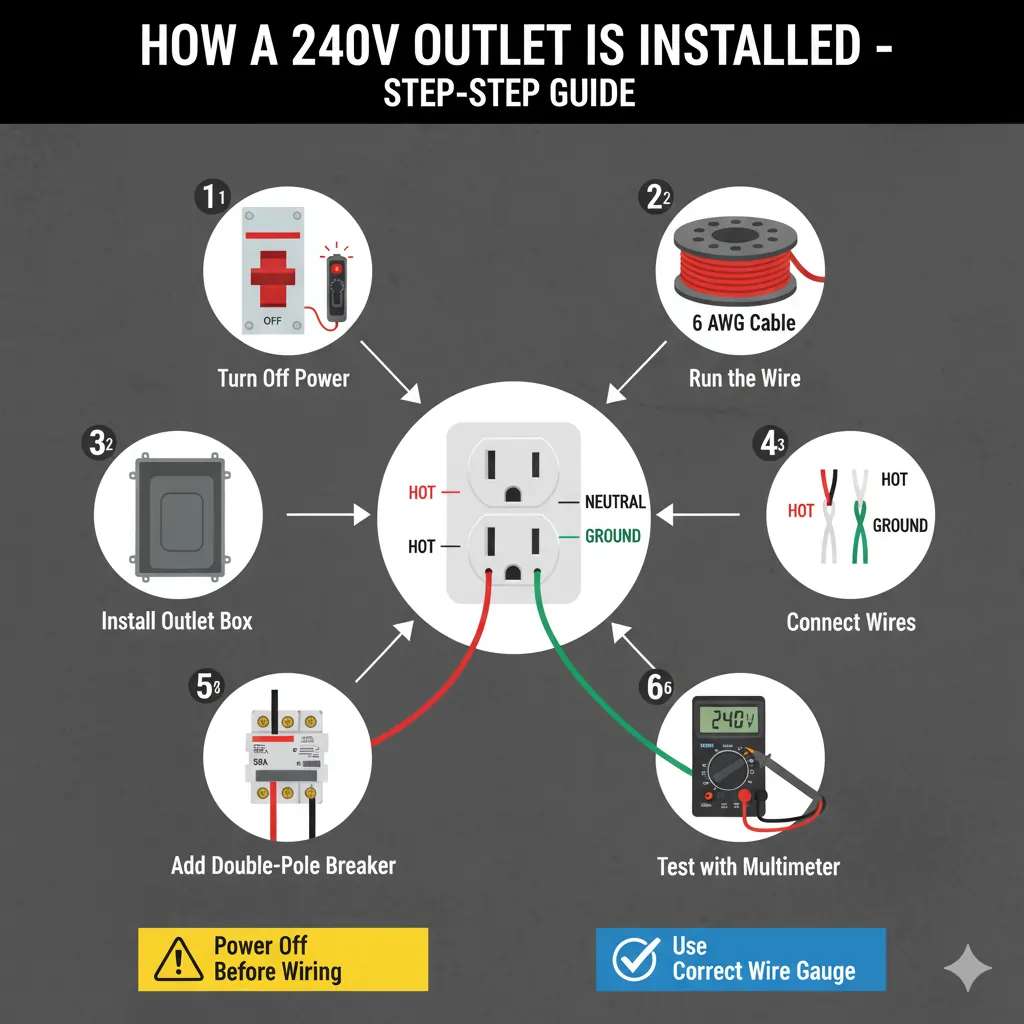
1️⃣ First thing I did—kill the power at the breaker panel. I flipped the main breaker off and double-checked with a non-contact voltage tester ($20). No way was I taking chances with 240V.
2️⃣ Next, I ran the right wire. Since I needed a 50A outlet, I used 6 AWG wire ($150 for 50 feet). If I were installing a dryer outlet, I’d have gone with 10 AWG instead. Using the wrong size? That’s just asking for trouble—overheating is no joke.
3️⃣ Then, I installed the outlet box. I went with a deep metal electrical box ($10) because it handles thicker wires better. A plastic one? Nope, not worth the risk—it can melt under high loads.
4️⃣ Time to hook up the wires. I connected Red & Black to hot (each carrying 120V, making 240V total), White to neutral (only needed for some outlets), and Green/Bare Copper to ground (because safety matters). I made sure to tighten the screws—loose connections overheat fast.
5️⃣ Now for the breaker. A 240V outlet needs a double-pole breaker (mine was 50A, cost me $30). I snapped it in place and made sure the hot wires were securely connected.
6️⃣ Last step—testing. Before plugging anything in, I grabbed my multimeter and checked the hot terminals. It read 240V, which meant I did everything right. If it hadn’t? I’d have gone back to figure out what I messed up!
Final Thoughts -How Much To Install a 240V Outlet?
A 240V outlet installation isn’t a small job, but it’s worth doing right. Whether for an EV charger, dryer, or workshop tool, safety comes first. If you’re confident in electrical work, a DIY install can save money. But if you’re unsure, hiring a pro ensures safety and code compliance.
I always recommend getting at least three quotes from electricians. This way, you get the best price and service. A safe and properly installed 240V outlet will last for decades—so do it right the first time!
FAQs -How Much To Install a 240V Outlet?
Can I install a 240V outlet myself?
DIY costs $50–$200, but mistakes can cause shocks or fires. How much to install a 240V outlet? It depends on your skills—hiring a pro costs $300–$1,200 and ensures safety. If you’re unsure about wiring, it’s best to hire a professional. To ensure your outlet is working properly, use an outlet tester.
How much do permits cost?
Permit fees range from $50–$250, depending on local regulations. Some electricians include permit costs in their service. Check with your local authority before starting the installation.
Is upgrading my electrical panel necessary?
If your panel is old, adding a 240V outlet may overload it. Panel upgrades cost $1,000–$3,000, depending on amperage. An electrician can tell if your panel can handle the extra load
How long does installation take?
A professional takes 1–3 hours, while DIY may take 3–6 hours. Additional wiring or upgrades can increase the time. If your panel needs an upgrade, expect a full-day job.