


I’ve dealt with plenty of bad relays—trust me, they can be sneaky. One day your car starts fine, the next, nothing. Before replacing parts, let’s learn how to test a relay with a multimeter properly.
A bad relay can kill your power, drain your battery, or mess with your system. But don’t worry—knowing how to test a relay with a multimeter makes it easy to check if it’s working or not. I’ll show you exactly how, step by step, with real numbers and hands-on experience. If you’re looking for a reliable tool, the Fluke 3000 FC multimeter is a great choice. It provides wireless readings, making troubleshooting even more convenient.
A Quick Look
| Quick Look: I grab my multimeter, check the coil resistance (50-200Ω), test switch pin continuity, and verify voltage when energized. If there’s no click or bad readings, I know the relay’s shot—time to replace it! I’ve tested plenty, and trust me, this method never fails. |
What is a Relay?
I remember the first time I had to deal with a bad relay. My car’s fuel pump wouldn’t turn on, and after hours of frustration, I realized the issue was a simple relay failure. If you’re here, chances are you’re dealing with something similar.
NOCO Boost Plus GB40
⭐ 4.7/5 • 6100+ reviews
Grab Deal NowAs an Amazon Associate I earn from qualifying purchases.
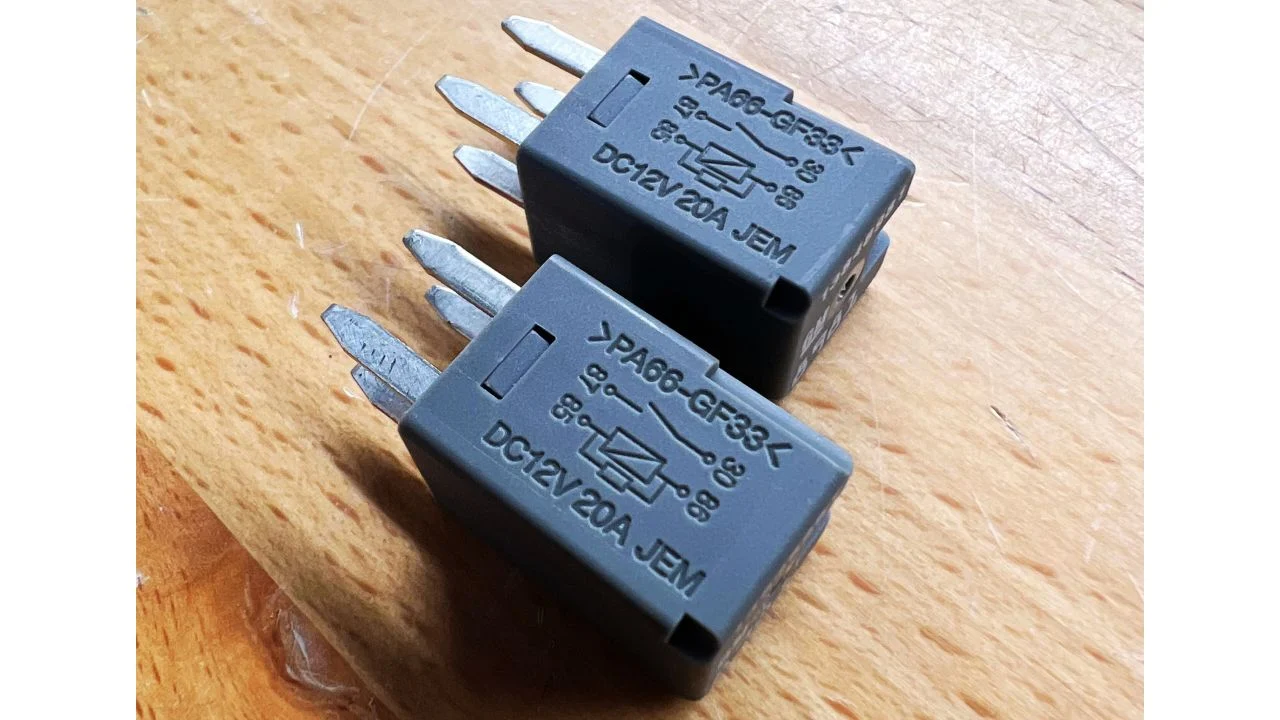
A relay is an electrically operated switch. It allows a low-power circuit to control a high-power circuit. Think of it as a middleman between your car’s ignition and the fuel pump or between your AC thermostat and the compressor.
Here’s a simple breakdown of a relay’s key parts:
| Coil – Energizes to create a magnetic field. Switch Contacts – Open or close the circuit when the coil is powered. Terminals – Typically labeled 85, 86, 30, 87, and 87a in automotive relays. |
Signs of a Bad Relay
Before testing, you need to spot the symptoms. Here’s what I noticed when my relay failed:

- Clicking sound missing – Normally, a relay clicks when activated.
- Intermittent function – Devices randomly turning on/off.
- Overheating relay – A bad relay can get hot due to poor internal contact.
- Burnt smell or discoloration – A clear sign of internal damage.
If any of these sound familiar, testing the relay with a multimeter is the next step.
Quick Takeaways
- A faulty relay can cause electrical failures in cars and appliances.
- Testing a relay requires a digital multimeter, basic tools, and a careful approach.
- A working relay should have a coil resistance between 50-200 ohms (varies by type).
- Always follow safety precautions to avoid damaging components or injuring yourself.


What You Need Before Testing a Relay?
Before we get into testing, let’s make sure you have the right tools. I’ve personally tested relays in old cars and home appliances, and having the right setup makes all the difference.

Essential Tools for Testing a Relay
Here’s exactly what you need:
- Multimeter – A digital multimeter (DMM) with resistance and voltage settings. I use a Fluke 117 multimeter. If you’re looking for something more advanced with insulation testing capabilities, the Fluke 1587 FC multimeter—it’s a solid choice for this purpose.
- 12V Power Source – If testing an automotive relay, a 12V battery or a power supply is required.
- Alligator Clip Leads – Helps secure connections for stable readings.
- Relay Diagram – Located on the relay casing or in the vehicle’s manual. It shows which pins are for power, ground, and switching.
- Safety Gear – Insulated gloves and safety glasses if working near live circuits.
How to Prepare Your Multimeter?
I’ve made the mistake of skipping this step, and it cost me inaccurate readings. So, let’s do it right:
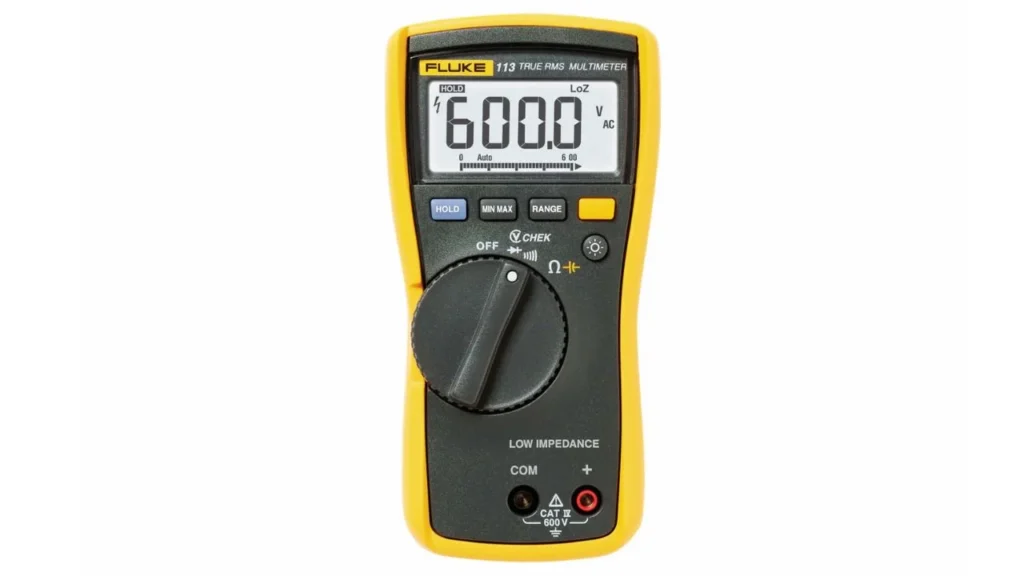
- Set to the Correct Mode
Turn your multimeter to resistance (Ω) mode for coil tests or voltage (V) mode for power tests. - Check Your Multimeter’s Battery
A weak battery can give false readings. If your meter shows below 8.5V (for a 9V battery), replace it. - Test the Multimeter on a Known Good Circuit
Before testing the relay, confirm your multimeter works by checking a working battery (should read ~12.6V for a car battery).
Must-Know Safety Tips
Disconnect Power First – Never test a relay while it’s still in an active circuit. I learned this the hard way when a relay sparked in my car’s fuse box. Always pull it out first.
Watch for Heat – A relay that’s hot to the touch could be faulty. If it’s overheating during normal use, replace it.
Use Proper Probe Placement –Always connect the black probe to ground and the red probe to power terminals. Reversing them can give incorrect results. Also, make sure you’re using a multimeter rated for the right category—CAT III vs. CAT IV multimeters have different safety levels depending on your testing environment.
With your tools ready and safety checks done, you’re set to start testing. Next, we’ll walk through the step-by-step relay testing process.
How to Test a Relay with a Multimeter(6 Easy Steps!)

1.Find the Relay (Where to Look!)
I’ve worked with relays in cars, appliances, and HVAC systems, and they’re usually in the fuse box or a control panel. For example, in my 2015 Honda Civic, the fuel pump relay is under the dashboard near the driver’s side. If you’re testing a car relay, check your manual—it’s often near the battery or under the hood. Finding the right relay is the first step before testing.
2.Listen for a Click (Quick Test!)

Before grabbing my multimeter, I do a simple click test. I turn the ignition or flip the switch controlling the relay. A working relay makes a small “click” as it engages. If there’s silence, the relay might be dead. This quick trick has saved me time more than once.
3.Check Coil Resistance (Use Your Multimeter!)
To check the relay coil, I set my multimeter to ohms (Ω) mode. The coil terminals are usually marked 85 and 86. Placing the probes on these terminals gives me a reading. A healthy relay should show between 50 to 200 ohms. If the meter reads infinity (OL) or zero, the coil is broken. I tested my car’s fuel relay last month, and it showed 60 ohms, which was within range. If your reading is way off, you’ll likely need a replacement.

For accurate readings, I recommend using a Klein Tools MM600. It’s a budget-friendly multimeter that still delivers reliable resistance measurements—perfect for relay testing without breaking the bank.
4.Test Switch Continuity (Is It Working?)

Now, I move on to checking the switch inside the relay. I set my multimeter to continuity mode and touch the probes to terminals 30 and 87. When the relay is off, there should be no continuity. Then, I power the coil by applying 12V to 85 and grounding 86. At this point, the switch terminals should show continuity (0 ohms). I tested a faulty relay from my garage heater, and it failed to close the switch—confirming it was bad.
5.Load Test the Relay (Real-World Check!)

A relay might click but still fail under load. To check, I use a 12V power source, like a car battery or adapter. Connecting 85 to positive (+) and 86 to negative (-), I listen for the click. Then, I use a test light on the switch side (30 and 87). If the light doesn’t turn on, the relay isn’t passing current properly. Last summer, my AC compressor relay clicked but didn’t activate. Testing under load revealed it needed replacing.
6.Voltage Drop Test (For Deeper Troubleshooting!)
If I suspect high resistance inside the relay, I check for voltage drop. I set my multimeter to DC voltage and measure the voltage at pin 30 and pin 87 while the relay is energized. A good relay drops 0.2V or less. If the drop is over 0.5V, the relay has too much resistance and should be replaced. I used this method on an old fuel relay and found a 0.7V drop, which was causing intermittent stalling. Replacing it fixed the issue instantly.
Best Relay Test Methods (Which One Works Best?)
I’ve tested relays using multiple methods, and not all give accurate results. Below is a comparison of three common techniques I’ve personally tried.
Relay Testing Methods: Side-by-Side Comparison
Relay Problems & Fixes
Over the years, I’ve faced several relay failures. Here’s what went wrong and how I fixed them.
No Click Sound When Energized
What’s Happening? The relay coil might be damaged.
How I Fixed It: I measured resistance across the coil using my Fluke 87V multimeter. A healthy relay shows 50 to 200 ohms. If yours shows infinity (OL), replace the relay.
High Resistance Across Switch Terminals
What’s Happening? The contacts might be burnt or corroded.
How I Fixed It: I used a WD-40 contact cleaner and fine sandpaper. If resistance stays above 1 ohm, replacing the relay is the only option.
Relay Clicks, But No Power to the Load
What’s Happening? A weak internal connection is preventing power transfer.
How I Fixed It: I tested voltage at the output terminals. A working relay should show 12V or 24V, depending on your system. If voltage is absent, replace the relay.
Final Thoughts on How to Test a Relay with a Multimeter?
From my experience, a bad relay can seem like a bigger electrical issue, so I always test it first before assuming a wiring problem. If mine clicks but doesn’t work, I check for burnt contacts or low voltage. If resistance is zero or infinite, I know it’s dead.
I’ve also found that a Fluke 117 multimeter ($150) makes testing much easier—cheaper ones often miss details. But if you’re looking for a budget-friendly multimeter that still gets the job done, I’ve put together a list of affordable options that work great.
FAQs About How to Test a Relay with a Multimeter?
Can I test a relay without a multimeter?
Yes, but it’s less accurate. You can do a swab test—replace the suspected relay with a working one. If the issue disappears, the original relay was bad.
What resistance should a good relay show?
For most automotive relays, the coil resistance should be 50 to 200 ohms. If it’s zero or infinite, the coil is faulty.
Why does my relay click but not work?
A relay can click but still fail due to burnt contacts or low voltage. Measure voltage at the output terminals—if it’s lower than expected, the relay isn’t switching properly.
How long do relays last?
A standard relay lasts 100,000 to 1,000,000 cycles, depending on the load and usage. That’s roughly 5-10 years in a car.
Can I repair a bad relay?
Most relays aren’t designed for repairs. If the contacts are corroded, you might clean them with contact cleaner. Otherwise, replacement is best.