


Confused about Fluke t5-1000 vs t6-1000 electrical comparison. The Fluke t5-1000 or the Fluke t6-1000? In this article, I will take an in-depth look at both of these Fluke meters and see how they compare. I will look at features, specifications, pros, and cons, and more for Fluke T6-1000 Vs T5-1000! So, if you are trying to decide which Fluke electrical testers to buy, let’s get started.
| Quick Look: When I first compared the Fluke T5-1000 vs T6-1000, the differences were pretty clear. The T6-1000 uses FieldSense technology, letting me measure voltage without test leads touching live wires, which felt a lot safer. Meanwhile, the T5-1000 kept things simple and reliable, perfect when I just needed quick, basic checks. |
Comparison Table of Fluke T5-1000 Vs T6-1000


Fluke T5-1000 Vs T6-1000 | Our Top Picks
Fluke T5-1000 Electrical Tester Review
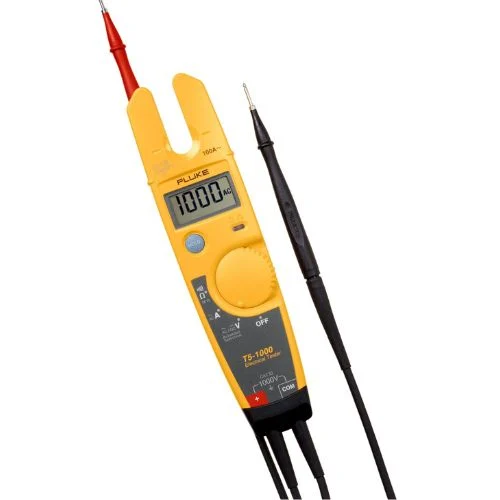
If you’re looking for an electrical tester that’s easy to use and quick to accurate, look no further than the Fluke T5-1000! This handy little electrical tester is perfect for any electrician or DIYer. With its Open Jaw current measurement, you can easily test currents without breaking the circuit. Plus, it’s been certified to withstand a 3-meter drop test, so you know it’s tough enough for any job. For more details, Let’s have a look at its key feature.
A Quick Look
Features:
- Auto-ranging: The Fluke t5-1000 can automatically select the appropriate range for you, making it easier and faster to take measurements.
- AC Voltage: You can measure AC voltage up to 1000 with CAT-III test leads.
- DC Voltage: If you’re an automotive technician, DC Voltage measurement is a must. You can measure voltages up to 600V with CAT-IV-rated test leads.
- AC Current: You can measure AC current only up to 100A.
- Resistance: You can also measure resistance up to 1kΩ
- Data hold: This allows you to hold the current reading on the screen to write it down for later use.
- Low battery indicator: This lets you know when the batteries are running low.
- Additional Features: This meter can perform both continuity and diode tests. If you still want more features in your electrical tester then Klein CL800 and CL900 needs your attention.
What I Liked About It?
In my hands-on testing, I noticed the open jaw current measurement saved me tons of time. My personal trial also showed the detachable leads were a lifesaver when one wore out. Plus, the auto-shutoff spared my battery more times than I can count, and the continuity beep made quick checks effortless without staring at the screen.
NOCO Boost Plus GB40
⭐ 4.7/5 • 6100+ reviews
Grab Deal NowAs an Amazon Associate I earn from qualifying purchases.
Where It Fell Short?
That said, I quickly realized the T5-1000 can’t measure DC current. In real-world use, it meant pulling out another meter for car or solar work. If you need DC readings like I often do, I’d recommend looking at the Fluke 325 multimeter or T6-1000 instead.
Package Includes:
- Fluke T5-1000 Electrical Tester
- 2x AA Batteries
- Fluke Slim Test leads
Fluke T6-1000 Electrical Tester Review
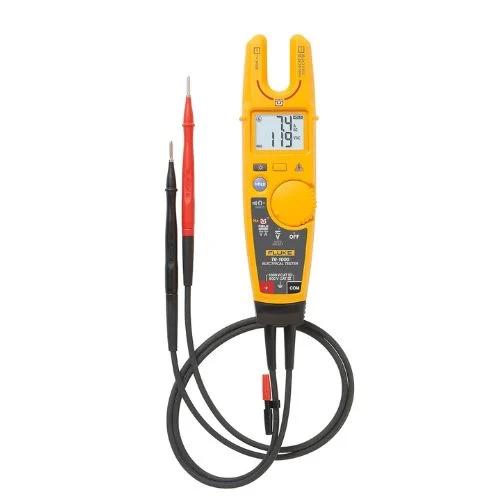
The Fluke T6-1000 is a top-of-the-line electrical tester perfect for home or professional use. With a more prominent display and backlight option, it’s easy to see readings even in dimly lit areas. Moreover, the open fork makes current measurement a breeze. You can also measure voltage with or without test leads, making this tester a versatile option.
And don’t forget about the resistance, frequency, and continuity tests! Whether you’re a contractor looking for a quality tool or an everyday homeowner who wants to be prepared for anything, the Fluke T6-1000 is precisely what you need.
Features:
- Display: It comes with a bigger and better display to see readings even in dimly lit areas.
- Auto-ranging: As it’s an auto-ranging tester, it can automatically select the appropriate range for you.
- Open fork: With its open fork of 18mm, you can measure current and voltages.
- AC Voltage: You can measure AC voltage up to 1000V with CAT-III standard test leads.
- DC Voltage: This electrical tester can also measure DC voltage up to 1000V.
- AC Current: It has a fork size of 18mm, so you can easily measure current up to 200A.
- Field Sense: It’s not like traditional NCV mode, but this allows you to measure voltage even without test leads!
- Resistance: You can measure resistance up to 100kΩ.
- Continuity: Continuity and diode test both can be performed with the beep alarm option.
- Frequency: With fluke, T6-1000you can also measure the frequency of any ac/dc circuit.
- Data hold: You can hold the reading on display with just one click.
- Low battery indicator: A low battery indicator lets you know when to change the batteries.
What Worked for Me?
In my hands-on experience, the Fluke T6-1000’s bigger display with a blue backlight made a real difference. I noticed it was much easier to read measurements in dark or awkward spaces compared to the fluke T5-1000. The larger fork size also worked great — I could easily clamp it around thick service wires where the T5 just didn’t fit.
Another thing that worked well was the automatic AC/DC voltage detection. During fast-paced jobs, I didn’t have to stop and manually switch settings, which saved me time and kept the workflow smooth.
What Didn’t Work for Me?
FieldSense technology sounded great at first, and in my personal trial, it definitely made checking voltage faster and safer. But when I worked around electrical noise or dense wiring, I noticed the readings weren’t always 100% accurate. I had to double-check with probes more than once, especially on sensitive systems. So for critical measurements, I couldn’t fully rely on FieldSense alone.
Why It Matters?
In real-world jobs, accuracy and speed can both be deal-breakers. If you’re like me and you need fast, non-contact readings for quick troubleshooting, the T6-1000 is a fantastic tool. But when the job demands perfect precision — like diagnosing control panels or sensitive electronics — I learned firsthand that you’ll still want a backup meter or stick with the T5-1000 for rock-solid reliability.
Package Includes:
- Fluke T6-1000 Electrical Tester
- 2x AA Batteries
- Fluke Slim Test leads
Similarities and Differences (Fluke T5-1000 vs T6-1000)
Similarities between
Fluke T5-1000 and T6-1000:
- Both electrical testers come with a fork-type jaw for measurements.
- Auto-ranging is also available in both Fluke electrical testers.
- Both Fluke electrical testers can measure AC/DC voltage.
- DC Current measurement is not available in both of these clamp meters.
- Both Fluke T5 and T6 require the same set of batteries (AA).
- Both electrical testers have the same test leads to measure voltages.
- Data holding option is also available in both of these electrical testers.
- You can check continuity with both Fluke T5-1000 and T6-1000.
- Auto shut off is also available in both of these electrical testers.
Differences between
Fluke T6-1000 and T5-1000:
- Fluke T6-1000 has a relatively bigger display than Fluke T5-1000.
There is a backlight option in the Fluke T6-1000, but the Fluke T5-1000 lacks this feature.
You can measure voltages up to 1000V with Fluke T6-1000, but Fluke T5-1000 can only measure voltages up to 690V.
Fluke T5-1000 can measure current up to 100A, whereas T6-1000 can measure current up to 200A.
You can measure resistance up to 1kΩ with Fluke T5-1000. However, Fluke T6-1000 can measure resistance up to 100kΩ.
The frequency option is available only in the Fluke T6-1000 electrical tester.
Fluke T6-1000 has a FieldSense option, but T5-1000 lacks this feature.
Finding the Right Fluke Tester: A Simple Guide Just for You
Choosing the right Fluke tester can feel a bit overwhelming, especially with so many options out there. But don’t worry—I’m here to help you make the best choice for your needs. Let’s break it down step by step.
What Do You Need It For?
First, I like to start by thinking about what I’ll actually be using the tester for. Here’s a quick rundown I usually go by:
Multimeters are my go-to tools when I need to measure voltage, current, and resistance. If you’re doing general electrical work, a good multimeter is probably your best bet.
Clamp Meters are super handy if you need to measure AC current without disconnecting any wires. I find them especially great for working safely with live circuits.
Insulation Testers are all about safety. When I’m checking if electrical insulation is holding up properly, these testers give me peace of mind.
Specialty Testers are perfect when I have a very specific job to do—like checking cables, ground resistance, or earth leakage. Fluke has specialized tools made exactly for these tasks too.
What Features Matter to You?
Once I figure out the type of tester I need, I start thinking about which features will actually make my life easier.
Measurement Range is a big one. If I’m only working on low-voltage circuits, a basic model usually does the job. But if high-voltage work is in the mix, I always go for something that can handle a wider range.
Accuracy is key too. Fluke’s reputation for precision is well-earned, but some models are even more accurate than others. I always ask myself—how exact do I really need my readings to be?
Safety Ratings are non-negotiable for me. I only trust testers with the right CAT ratings because they’re built to protect you in the environment you’re working in.
Ease of Use is another thing I pay attention to. Auto-ranging and backlit displays save me a ton of hassle, especially when I’m working in dark panels or tight spaces.
Bonus Features like data logging or Bluetooth connectivity are sometimes just nice to have. I think about whether these extras will actually make my day-to-day work easier—or if they’re just cool to show off.
How Tough Does It Need to Be?
In my experience, Fluke testers are already built tough. But if you’re like me and often work in rough, dusty, or wet conditions, it’s worth going the extra mile. I always check if a model is dust-proof, water-resistant, or ruggedized. Plus, Fluke’s warranties give me extra confidence that my investment is protected.
What’s Your Budget?
Budget is always part of the equation. I like to figure out early on what I’m willing to spend and then focus only on the testers that offer the best value for my needs. From what I’ve seen, investing in a quality Fluke tester usually pays off long-term—you don’t want to cheap out on something you’ll depend on every day.
Where Should You Buy It?
After deciding what I want, I make sure to buy from an authorized dealer or a reputable online store. Over the years, I’ve learned that if a deal looks too good to be true, it usually is. It’s just not worth risking it with counterfeits or sketchy sellers.
A Few Extra Tips
One thing that always helps me is reading real user reviews and comparisons online. It gives me a better idea of what to expect before I commit.
If possible, I like to get hands-on with the testers at a trade show or a local dealer—it’s amazing how much you can learn just by holding a tool in your hand.
And finally, I always check Fluke’s website. Their resources—like manuals, FAQs, and product breakdowns—are packed with useful info that helps me make smarter choices.
Bottom line:
Both Fluke testers have their own pros and cons. In comparing the fluke T5-1000 vs T6-1000, one thing is obvious. If you’re looking for an electrical tester with higher ranges, the Fluke T6-1000 should be your choice. But if you’re somebody who wants an electrical tester for home or DIY use, you must go for the fluke T5-1000. If you’re still not sure then consider fluke 323 or 324 for high ranges. Do you have any experience with either of these Fluke electrical testers? Let us know your thoughts in the comments below!
Frequently Asked Question:
What’s the difference between a multimeter and a clamp meter?
A multimeter is an instrument that can measure multiple electrical quantities such as voltage, current, and resistance. However, A clamp meter is a specialized type of multimeter that can measure only AC current. Clamp meters have a “jaw” that goes around the conductor, and they work by measuring the magnetic field around the conductor.
Which Fluke electrical tester is better, fork-type or clamp type?
There’s no simple answer to this question as it depends on your specific needs. If you need to measure AC current in confined places, it is better to use a clamp meter. Otherwise, if there are not too many close points, you can also use Fork-type electrical testers.
How to measure dc amps with a clamp meter?
You can not measure DC amps with a clamp meter or any fork-type jaw, but you can measure DC current by connecting test leads on any of these electrical testers (If they offer DC amps measurements).