


It’s a bit confusing for beginners to understand how to test car wiring with a multimeter. You can either use a test lamp or a multimeter for this purpose. A multimeter is an essential tool for any DIY mechanic, and can be used for a variety of tasks, including testing car wiring.
In this guide, I will walk you through the process of using a multimeter to test car wiring. I’ll also provide some tips on how to troubleshoot common electrical problems in cars. So, if you’re looking for ways to troubleshoot electrical problems in your car, this guide is for you!
A Quick Look
| Quick Look: To test car wiring with a multimeter, set it to DC voltage and probe the wires for power. Check for continuity to identify any breaks or shorts in the wiring. Always test with the car off, and follow safety precautions to avoid electrical hazards. If you’re unsure about the readings, consult a professional to avoid damaging your car’s electrical system. |
7 Main components of an automotive electrical system:
The automotive electrical system is complex and consists of several crucial components that work together to ensure your vehicle runs smoothly. Below, we outline the seven main components of this system. Each section includes a link to detailed testing guides, helping you maintain and troubleshoot your car’s electrical system effectively.

NOCO Boost Plus GB40
⭐ 4.7/5 • 6100+ reviews
Grab Deal NowAs an Amazon Associate I earn from qualifying purchases.
Each of these systems has its own wiring that needs to be tested. The most important thing to remember when testing car wiring is to always disconnect the battery before testing any circuits. This will prevent you from accidentally shorting out a circuit and causing damage to your car’s electrical system.


How to test car wiring with a multimeter? | A comprehensive Guide
Testing car wiring with a multimeter is relatively simple. First, you’ll need to identify the circuit that you want to test. Once you’ve done that, you have to follow the below mentioned steps.
What you’ll need
The only thing you need to do before you begin a test is to gather all your tools. The essential tools you’ll need are:
- A digital multimeter
- An automotive test light (Optional)
- Screw Driver
- Some jumper wires
These tools will help you to easily check the voltage, current, and resistance in any automotive circuit.
Where to find the test points in car wiring?
Now you have the right gear to start your testing. But now you have to decide from where to start. Wiring diagrams will help you a lot to find the test points.
- If you don’t have any wiring diagram, you can start testing from the fuse box. All you have to do is to locate the fuse box in your car and start testing from there.

- There is also a diagram of complete car wiring on fuse box cover at inner side.

- Another way to find the test points is to follow the wire from the component that you want to test. For example, if you want to test the headlight circuit, you can follow the wire from the headlight switch to the headlight bulb.

This method is a bit time-consuming, but it’s worth it if you don’t have a wiring diagram. Once you’ve found the test points, you’re ready to start testing!
1. How to test for continuity in car wiring?
Testing for continuity is crucial when troubleshooting car wiring issues. Continuity means there is a low resistance path between two points, allowing current to flow freely through the circuit. Here’s how you can test for continuity using a multimeter or a test light:

Step 1: Set Your Multimeter
Set your multimeter to the “continuity” setting. This is usually indicated by a sound wave symbol or a diode symbol.
Step 2: Prepare the Probes
Insert the black probe into the common (COM) jack and the red probe into the volt-ohm (VΩ) jack.
Step 3: Test the Multimeter
Touch the two probes together. The multimeter should beep or show a low resistance value, indicating it’s ready to test for continuity.
Step 4: Identify Test Points
Identify the two points in the circuit you want to test. Ensure the car’s battery is disconnected to avoid any electrical hazards.
Step 5: Perform the Continuity Test
If the multimeter does not beep or show a low resistance value, there is an open circuit, meaning the path is broken.
Now the Question Arises which parts should beep and which not? So let’s figure out!
Parts That Should Not Give You a Beep
(No Continuity) If They Are OK:
Open Switches:
- Ignition Switch (when in the off position)
- Light Switches (when in the off position)
- Brake Light Switch (when the brake pedal is not pressed)
Disengaged Relays:
- Fuel Pump Relay (when the car is off)
- Headlight Relay (when the lights are off)
Disconnected Fuses:
- Any fuse should not show continuity if it is removed from its holder.
- Disconnected or Unpowered Circuits:
- Starter Circuit (when the ignition is off)
- Horn Circuit (when the horn button is not pressed)
Parts That Should Give You a Beep
(Continuity) If They Are OK:
Closed Switches:
- Door Courtesy Light Switch (when the door is open)
- Hood or Trunk Light Switch (when the hood or trunk is open)
Ground Wires:
- Chassis Ground Connections should always show continuity to the negative battery terminal or the chassis ground.
Continuous Circuits:
- Battery Positive to Fuse Box Main Line should show continuity.
Ignition System Components:
- Ignition Coil Primary and Secondary Windings should show continuity through their respective circuits when tested individually.
2. How to test for voltage in car wiring?
Testing for voltage is essential when diagnosing car wiring issues. Voltage is the difference in electrical potential between two points in a circuit. Most car equipment operates at around 12V, so a voltage reading between 10.8V and 14V is generally acceptable. Here’s a detailed step-by-step guide:
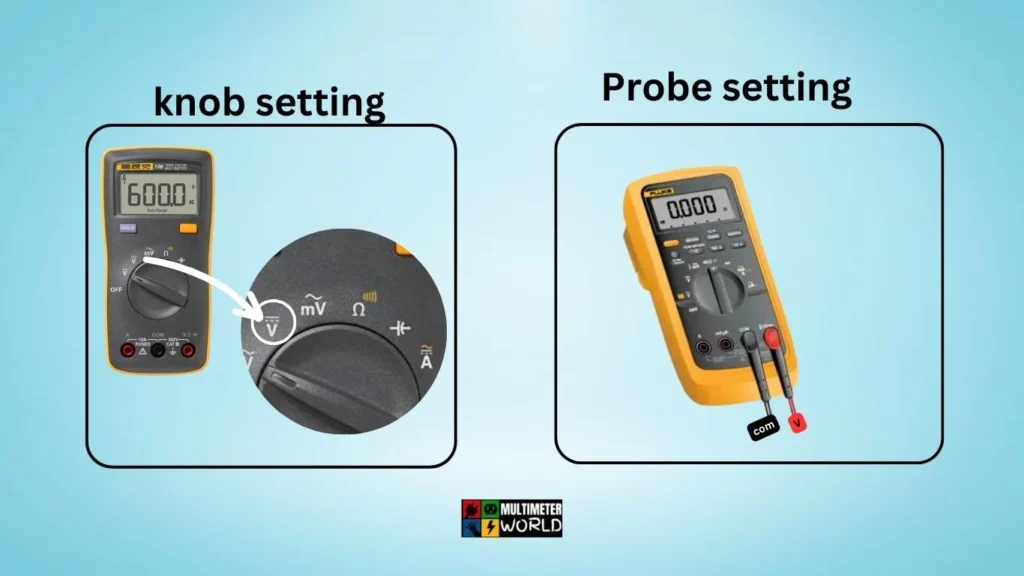
Step 1: Set Your Multimeter
- Set the Multimeter to Voltage: Turn the dial on your multimeter to the “voltage” setting (usually marked as V or DCV). This setting is essential for measuring the electrical potential difference in your car’s circuits.
Step 2: Prepare the Probes
- Insert the Probes: Insert the black probe into the common (COM) jack and the red probe into the volt-ohm (VΩ) jack. Proper connection of the probes is crucial for accurate measurements.
Step 3: Identify Test Points

- Identify Points to Test: Determine the two points in the circuit where you want to measure the voltage. Common components to test include:
- Battery Terminals
- Alternator Output
- Fuse Box Connections
- Headlight Connectors
Step 4: Perform the Voltage Test
- Touch the Probes to the Test Points: Touch the red probe to the positive point and the black probe to the negative point or ground. Ensure firm contact for a reliable reading.
- Battery Terminals: Red probe on the positive terminal, black probe on the negative terminal.
- Alternator Output: Red probe on the output terminal, black probe on the chassis ground.
- Fuse Box Connections: Red probe on the fuse terminal, black probe on the chassis ground.
Step 5: Read and Interpret the Display
- Read the Display: The multimeter will display the voltage between those two points. Most car components operate efficiently within a specific voltage range.
- Ideal Voltage Range: A reading between 10.8V and 14V is generally acceptable.
- Battery: A healthy car battery should read between 12.4V and 13.8V when the car is off.
- Alternator: When the car is running, the alternator should output between 11.8V and 14.4V.
- Headlights and Other Accessories: Should read close to 12V when on.
Step 6: Troubleshoot Any Issues
- Analyze the Results: If the voltage reading is outside the acceptable range, further investigation is required.
- Low Voltage: Indicate a weak battery, poor connections, or a failing alternator.
- High Voltage: May suggest an issue with the voltage regulator or alternator.
- Take Action: Depending on the reading, you may need to charge or replace the battery, check connections, or inspect the alternator and voltage regulator.


3. How to test for ground in car wiring?
Testing for ground in cars is crucial to ensure that a circuit has a proper connection and functions correctly. Here’s how to test for a good ground connection using a multimeter or a test light:

Step 1: Set Up Your Testing Equipment
- Multimeter Preparation: Set the multimeter to the continuity or resistance (ohms) setting.
- Test Light Preparation: Ensure the test light is functioning by connecting it to a known power source.
Step 2: Identify the Negative Terminal
- Locate the Negative (-) Battery Terminal: This will be your reference point for testing ground connections.
Step 3: Test for Ground Using a Multimeter
- Touch the Probes: Connect one probe to the negative (-) battery terminal.
- Test the Circuit Point: Touch the other probe to the point in the circuit you want to test.
- Multimeter Beep or Reading: If the multimeter beeps or shows a low resistance value, there is a good ground connection.
- No Beep or High Resistance: Indicates a bad ground connection that needs to be fixed or replaced.
Step 4: Test for Ground Using a Test Light
- Connect the Test Light: Attach one end of the test light to the negative (-) battery terminal.
- Test the Circuit Point: Touch the other end of the test light to the point in the circuit you want to test.
- Test Light Illuminates: Indicates a good ground connection.
- Test Light Does Not Illuminate: Indicates a bad ground connection that needs to be addressed.

Components to Test for Ground Connections:
- Battery Ground Cable: Ensures the battery is properly grounded to the chassis.
- Chassis Ground Points: Various ground points on the chassis that connect to different components.
- Engine Ground Strap: Connects the engine block to the chassis ground.
- Electrical Components: Such as headlights, tail lights, and sensors.
By following these steps, you can accurately test for ground connections in your car’s wiring, ensuring that all components have a reliable ground and function correctly.
Most common problems with automotive electrical systems:

There are different types of problems that can occur in automotive electrical systems. The most common problems are:
- Open circuits: This is the most common type of problem. An open circuit is one where there is a break in the continuity of the circuit. This can be caused by a number of things, such as a blown fuse, a broken wire, or a disconnected component.
- Short circuits: A short circuit is one where there is an undesired connection between two points in the circuit. This can be caused by a number of things, such as a loose wire, a damaged component, or a faulty connection.
- Ground problems: Ground problems are one of the most common types of problems. A ground problem is one where there is an undesired connection between the negative (-) side of the circuit and ground. This can be caused by a number of things, such as a loose wire, a damaged component, or a faulty connection.
- Voltage problems: Voltage problems are one of the most common types of problems. A voltage problem is one where the voltage in the circuit is not within the desired range. This can be caused by a number of things, such as a faulty voltage regulator, a bad battery, or a loose connection.
- Dirty or corroded connections: Dirty or corroded connections are one of the most common types of problems. This can be caused by a number of things, such as dirt, debris, or corrosion.
- Fuses: Fuses are one of the most common types of problems. This can be caused by a number of things, such as a blown fuse.
- Components: Components are one of the most common types of problems. This can be caused by a number of things, such as a damaged component.
Safety Guide for Car Wiring Electrical Testing
Testing car wiring is essential for diagnosing and fixing electrical issues, but it comes with risks. As an expert in automotive electrical systems, I’m here to guide you through the safety precautions necessary to prevent accidents, damage, or injury while testing your car’s wiring.
Safety Precautions before doing car wiring test

- Disconnect the Battery:
- Always disconnect the negative terminal of the battery before starting any electrical testing. This prevents accidental short circuits and potential electric shocks.
- Use Proper Tools:
- Multimeter and Test Light: Ensure your multimeter is in good condition and set to the correct setting. Test lights should be checked for functionality before use.
- Insulated Tools: Use insulated screwdrivers and pliers to prevent accidental electrical contact.
- Avoid Wet Conditions:
- Dry Environment: Perform tests in a dry environment to avoid the risk of electric shock and damage to the car’s electrical components.
- Check for Loose Connections:
- Secure Connections: Loose or corroded connections can lead to inaccurate readings and potential sparks.
- Beware of High Voltage Areas:
- Ignition System: The ignition coil and spark plug wires carry high voltage. Ensure the ignition is off and avoid direct contact.
- Handle Fuses with Care:
- Proper Removal: When checking or replacing fuses, use a fuse puller and ensure the correct amperage is used to prevent electrical fires.
- Ground Yourself:
- Prevent Static Discharge: Ground yourself before touching any electronic components to prevent static electricity from damaging sensitive circuits.
- Double-Check Your Work:
- Verify Connections: Before reconnecting the battery, double-check all connections to ensure they are secure and correct.
Call a Support Technician:
If you are unsure about any step or if the problem persists, do not hesitate to contact a qualified automotive electrician. Your safety and the proper functioning of your vehicle are paramount.



Final Words:
Testing your car’s electrical system can be straightforward with the right precautions and tools. However, if you encounter any difficulties or uncertainties during your tests, it is always best to seek professional help. Electrical systems can be complex and potentially dangerous if not handled correctly.
FAQs for Testing Car Wiring
1. What should I do if I don’t get a reading on my multimeter?
If you don’t get a reading on your multimeter, start by checking the battery connection to ensure it is properly connected and fully charged. Verify that the multimeter is set to the correct mode, whether it’s for voltage, continuity, or another measurement.
Make sure the probes are inserted correctly into the multimeter and making solid contact with the test points. Additionally, inspect the circuit for any visible signs of damage or disconnected wires that could be affecting the reading.
2. How can I identify a bad ground connection in my car?
A bad ground connection can often be identified by dim or flickering lights, such as headlights or dashboard lights. You might also notice unusual electrical behaviors like the radio cutting out or windows operating inconsistently.
Using a multimeter, you can measure resistance between the ground point and the negative battery terminal; high resistance indicates a bad ground. Regularly inspecting ground connections can help prevent these issues and ensure proper electrical function.
3. What are the signs of a failing voltage regulator in a car?
Signs of a failing voltage regulator include the battery overcharging or undercharging, indicated by a voltage consistently too high (above 14.5V) or too low (below 10V) when the engine is running.
You may also notice headlights appearing unusually dim or excessively bright, and various electrical components might start to fail or act erratically. The battery warning light on the dashboard may illuminate, signaling an issue with the voltage regulator that needs immediate attention.
4. Can I test car wiring without disconnecting the battery?
Testing car wiring without disconnecting the battery is not recommended due to safety concerns. Always disconnect the battery to prevent accidental short circuits, which can damage components and cause sparks.
Disconnecting the battery also ensures accurate readings by eliminating interference from live circuits and protects you from the risk of electric shock. Properly preparing for tests by disconnecting the battery can prevent many potential hazards.
5. How often should I check the wiring in my car?
Regular checks of your car’s wiring can prevent major electrical issues. It’s a good idea to inspect wiring connections during routine maintenance, such as oil changes or tire rotations. Before embarking on long road trips, check the wiring to ensure everything is in working order.
If you notice any symptoms of electrical problems, such as dimming lights or malfunctioning accessories, conduct a thorough inspection promptly. Regular maintenance and timely inspections can keep your car’s electrical system functioning reliably.